Christmas Carols in the Church Service: the most beautiful carols for Midnight Mass & Christmas Eve
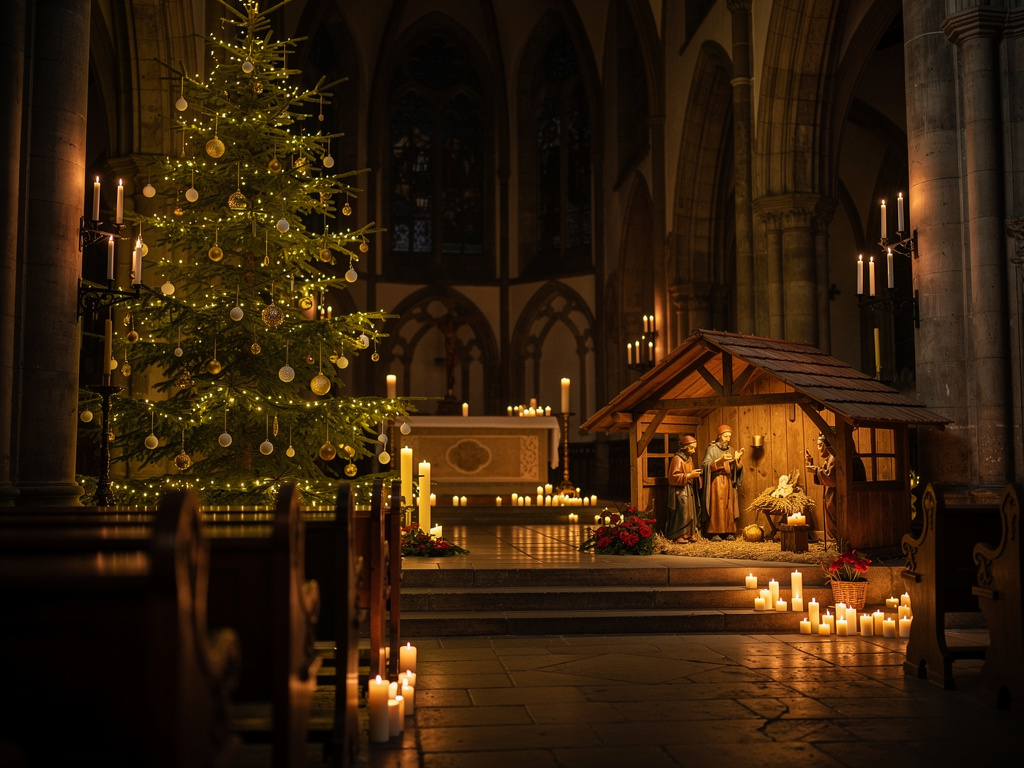
Which Christmas carols are sung in the church service?
When Stille Nacht rings out at the end of Midnight Mass, the service becomes the moment the congregation remembers all year long. Here you will find the most beautiful church Christmas carols for Midnight Mass and Christmas Eve – with Gotteslob and EG numbers and the right place in the order of service.
The key points at a glance
- The church Christmas carols in the service include Stille Nacht (GL 249 / EG 46), O du fröhliche (GL 238 / EG 44) and Vom Himmel hoch (GL 237 / EG 24).
- Stille Nacht almost always comes at the end of Midnight Mass, O du fröhliche often as the last hymn of the service.
- The Christmas Eve Vespers in the early evening (often with a nativity play) differs from the solemn nighttime Midnight Mass.
- Christmas carols are not sung until Christmas Eve – during Advent, Advent hymns are sung.
- Christmas 2026: Christmas Eve on Thursday, 24 December; Christmas Day on 25 December.
Church Christmas carols are hymns that celebrate the birth of Jesus – unlike the secular winter and Christmas hits that play everywhere at the same time of year. Among the indispensable ones are Stille Nacht, heilige Nacht (GL 249 / EG 46), O du fröhliche (GL 238 / EG 44), Martin Luther's Vom Himmel hoch, da komm ich her (GL 237 / EG 24), the tender Es ist ein Ros entsprungen (GL 243 / EG 30) and the family-friendly Ihr Kinderlein, kommet (GL 248 / EG 43).
Which hymns belong in the Midnight Mass?
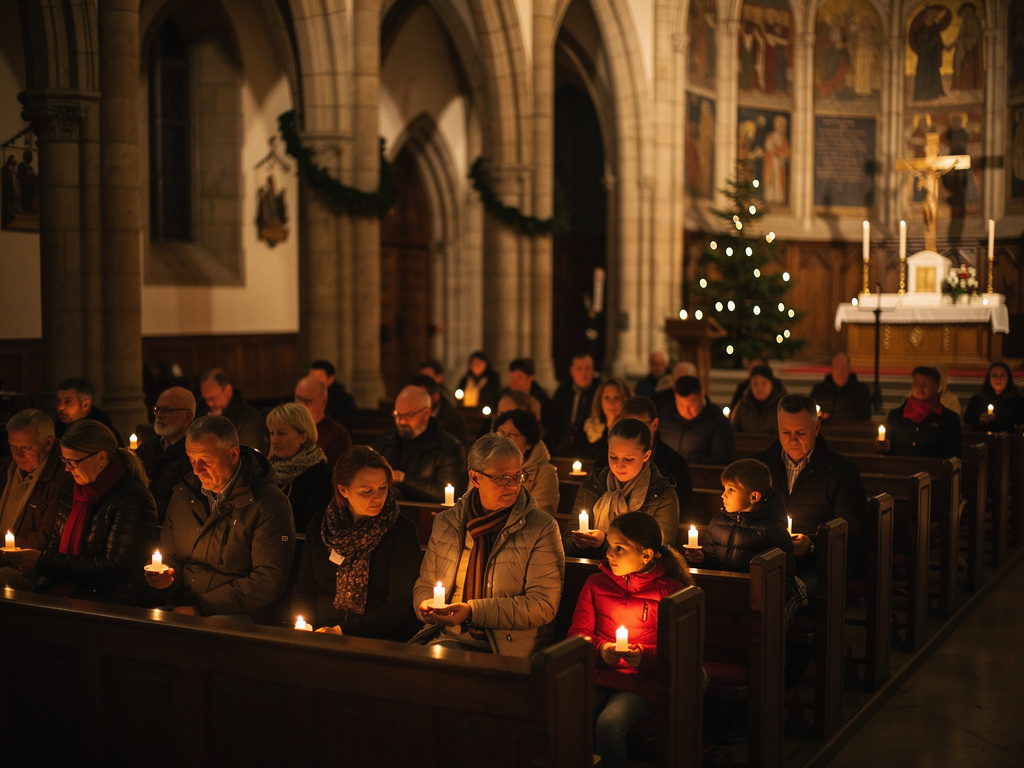
The Midnight Mass follows the order of the service, and each stage calls for its own character of hymn. For the opening – often still in darkness, by candlelight – Vom Himmel hoch or Gelobet seist du, Jesu Christ (GL 252 / EG 23) are fitting. For the preparation of the gifts, the contemplative Ich steh an deiner Krippen hier (GL 256 / EG 37) is suitable; for Communion, the jubilant Nun singet und seid froh / In dulci jubilo (GL 253 / EG 35). And at the close, Stille Nacht stands almost everywhere – often sung while the congregation lights its candles.
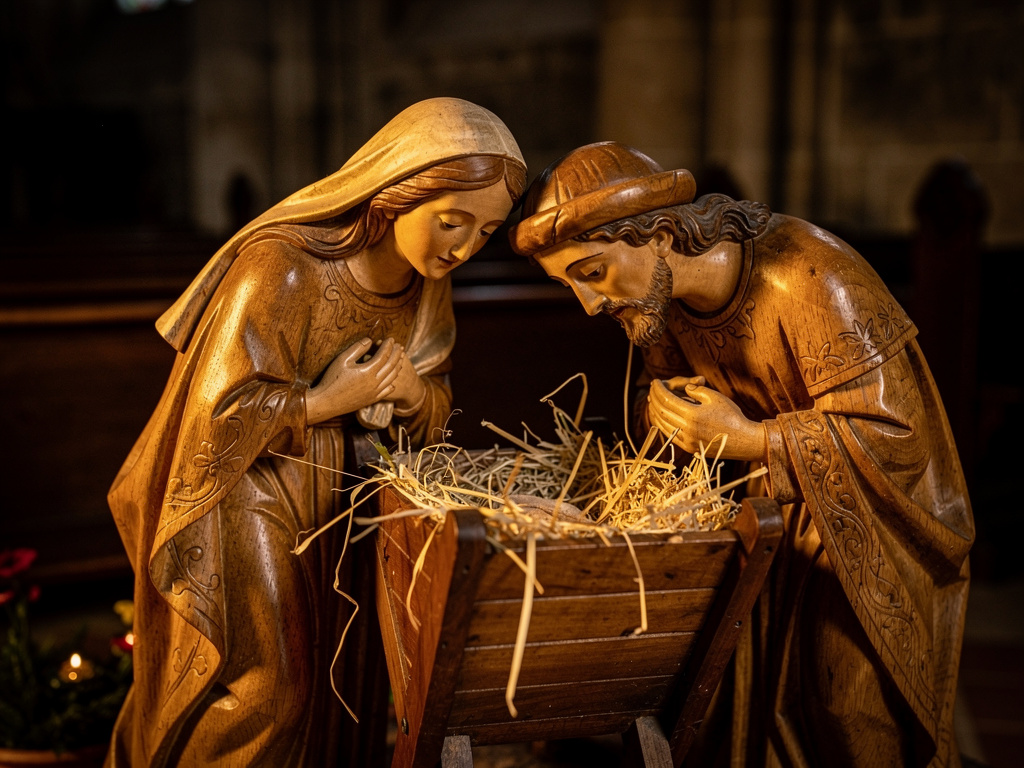
What is the difference between Christmas Eve Vespers and Midnight Mass?
The Christmas Eve Vespers is the early, family-friendly service in the afternoon or early evening of 24 December – frequently with a nativity play; here easily singable hymns such as Ihr Kinderlein, kommet and O du fröhliche are in their place. The Midnight Mass is the solemn nighttime celebration of the hour of Jesus's birth, usually from 10 or 11 p.m.; it carries a more festive, quieter tone and classically culminates in Stille Nacht. Which hymns belong to the weeks of expectation beforehand, you can read in the article Advent Hymns for the Church Service.
Which Christmas carols appear in the Gotteslob and the Evangelisches Gesangbuch?
The following overview lists the best-known church Christmas carols with their number in the Gotteslob (GL, 2013) and the Evangelisches Gesangbuch (EG). All the hymns named are available in the eKlecia® app on a real pipe organ.
| Christmas carol | GL | EG | Place in the service |
|---|---|---|---|
| Stille Nacht, heilige Nacht | 249 | 46 | End of Midnight Mass |
| O du fröhliche | 238 | 44 | Often the last hymn |
| Vom Himmel hoch, da komm ich her | 237 | 24 | Opening (Luther) |
| Es ist ein Ros entsprungen | 243 | 30 | Contemplative |
| Ihr Kinderlein, kommet | 248 | 43 | Christmas Eve Vespers, nativity play |
| Gelobet seist du, Jesu Christ | 252 | 23 | Christmas Day (Luther) |
| Lobt Gott, ihr Christen alle gleich | 247 | 27 | Festive |
| Nun singet und seid froh (In dulci jubilo) | 253 | 35 | Jubilant, Communion |
| Ich steh an deiner Krippen hier | 256 | 37 | Preparation of the gifts (P. Gerhardt) |
| Herbei, o ihr Gläubigen (Adeste fideles) | 241 / 242 | 45 | Festive entrance |
A denominational note on Adeste fideles: in the Gotteslob the German version appears as Nun freut euch, ihr Christen (GL 241) and the Latin as Adeste fideles (GL 242); in the Evangelisches Gesangbuch the same melody is called Herbei, o ihr Gläubigen (EG 45). Incidentally, the Advent hymns Macht hoch die Tür and Tochter Zion do not belong on the Christmas list – they are sung before the feast.
The best-known Christmas carols and their history
The best-known Christmas carol in the world is Stille Nacht, heilige Nacht: first heard in 1818 in Oberndorf, Austria – text by Joseph Mohr, melody by Franz Xaver Gruber – and today sung in more than 300 languages and recognised by UNESCO as intangible cultural heritage. Vom Himmel hoch was written by Martin Luther in 1535, originally for his own family. And Es ist ein Ros entsprungen comes from Trier around 1587; the famous four-part setting by Michael Praetorius (1609) makes it to this day the epitome of Christmas intimacy.
"Stille Nacht, heilige Nacht" – when the congregation lights its candles, no more words are needed.
Dignified Christmas music – even without an organist
At Christmas in particular, when the church is full, the organist is missing in many places. With the eKlecia® app, every one of these hymns sounds on a real pipe organ – from Vom Himmel hoch at the opening to Stille Nacht at the close. A smartphone and a loudspeaker are enough, and it plays offline too.
See all features of the app – or download the app and try it free for four weeks.
How do I put together a coherent hymn plan for Christmas?
A good Christmas hymn plan follows a dramatic arc: calm and expectant at the beginning, jubilant in the middle, still and heartfelt at the close. Choose hymns that your congregation can sing along to with confidence – at Christmas there are many infrequent churchgoers present, for whom it is precisely the familiar melodies that make the feast. You prepare the right hymns in advance as a list in the eKlecia® app and call them up during the service with a tap – whether in the parish church, at the Christmas Eve Vespers in the care home, or at the celebration in the hospital.
Christmas music for your congregation – entirely without an organist?
→ See all Christmas carols in the hymn list
→ All features of the eKlecia® app
→ Prices and free trial access
Frequently asked questions
Which hymns are sung in the Midnight Mass?
Typical are Stille Nacht (GL 249 / EG 46) as the close, O du fröhliche (GL 238 / EG 44), Vom Himmel hoch (GL 237 / EG 24), Es ist ein Ros entsprungen (GL 243 / EG 30) and Ihr Kinderlein, kommet (GL 248 / EG 43). The order follows the course of the service from the opening to the closing hymn.
Which is the best-known Christmas carol?
Stille Nacht, heilige Nacht – first heard in 1818 in Oberndorf, Austria (text by Joseph Mohr, melody by Franz Xaver Gruber), today sung in more than 300 languages and recognised by UNESCO as cultural heritage.
Which Christmas carols are in the Gotteslob?
Among others, GL 237 Vom Himmel hoch, GL 238 O du fröhliche, GL 243 Es ist ein Ros entsprungen, GL 248 Ihr Kinderlein, kommet, GL 249 Stille Nacht, GL 252 Gelobet seist du, Jesu Christ and GL 253 Nun singet und seid froh.
What is the difference between Christmas Eve Vespers and Midnight Mass?
The Christmas Eve Vespers is the early, family-friendly service in the afternoon or early evening of 24 December, often with a nativity play. The Midnight Mass is the solemn nighttime celebration of the hour of Jesus's birth, usually from 10 or 11 p.m.
Are Advent hymns and Christmas carols the same?
No. Macht hoch die Tür (GL 218 / EG 1) and Tochter Zion (GL 228 / EG 13) are Advent hymns, not Christmas carols. True Christmas carols are not sung until Christmas Eve.