Gotteslob or Evangelisches Gesangbuch? The Two Great Hymnals at a Glance

Gotteslob and Evangelisches Gesangbuch: Two Books, One Tradition
The Gotteslob is the Catholic hymnal, the Evangelisches Gesangbuch the Protestant one – two classics that lie in millions of pews. But how do they differ, what do they have in common, and how do you find a hymn in both? This overview explains it.
Anyone who shapes the music in a church congregation cannot avoid these two books. They shape congregational singing throughout the entire German-speaking world. And although they belong to different confessions, they share a large common treasury of hymns. This article sorts out the most important differences and shows why eKlecia® deliberately unites hymns from both books.
The Key Points at a Glance
- The Gotteslob is the Catholic hymnal (current edition 2013), the Evangelisches Gesangbuch (EG) the Protestant one (introduced 1993/1994).
- Both have the same structure: a nationally identical core section (Stammteil) and a regional section (Regionalteil) – in the Gotteslob the diocesan appendix – with hymns of the respective region.
- Many hymns appear in both books (a shared, ecumenical treasury of hymns), often under a different number – there are dedicated concordances for this.
- The Evangelisches Gesangbuch is published in around 14 regional editions with a common core repertoire.
- The eKlecia® app unites more than 900 hymns from both hymnals on a real pipe organ.
What is the Gotteslob?
The Gotteslob is the official prayer and hymn book of the Catholic dioceses in Germany, Austria and South Tyrol. The current edition appeared in 2013 and replaced the first Gotteslob of 1975. It is divided into a core section (Stammteil), which is identical in all dioceses, and a diocesan appendix with hymns and prayers of the respective region. The Diocese of Regensburg, for example, has its own appendix, as does every other diocese.
What is the Evangelisches Gesangbuch?
The Evangelisches Gesangbuch (EG) is the hymnal of the Protestant regional churches (Landeskirchen). It was introduced from 1993/1994 onward and replaced the older Evangelisches Kirchengesangbuch. The EG, too, consists of a common core section (Stammteil) – around 535 hymns that are the same in all editions – and regional appendices. In total there are around 14 regional-church editions that supplement the core repertoire with hymns of their own.
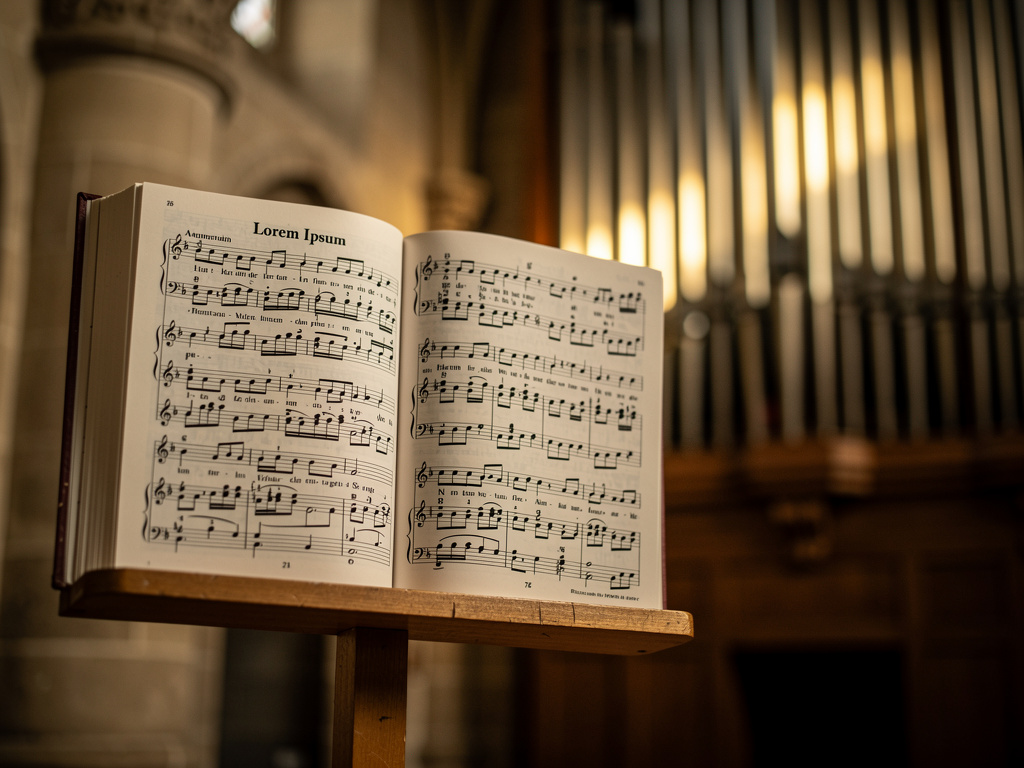
How do the Gotteslob and the Evangelisches Gesangbuch differ?
The main difference is the confession: the Gotteslob is Catholic, the Evangelisches Gesangbuch Protestant. This shows in the liturgical sections (the Mass as opposed to the Protestant service), in some versions of the texts, and in the selection of hymns. In the core body of church hymns, however, there is a large overlap.
“The same hymns, two numbers – the shared treasury of hymns of Catholic and Protestant is greater than many think.”
Which hymns appear in both hymnals?
Many of the best-known church hymns appear both in the Gotteslob and in the Evangelisches Gesangbuch – usually under a different number. Examples are “Macht hoch die Tür” (GL 218 / EG 1), “Großer Gott, wir loben dich” (GL 380 / EG 331), “Von guten Mächten” (GL 430 / EG 65) and “Nun danket alle Gott” (GL 405 / EG 321). For these overlaps there are dedicated concordances that match the numbers to one another.
This ecumenical core makes it possible for Catholic and Protestant congregations to sing together – at a wedding, a funeral or an ecumenical service. Anyone who knows the corresponding number in the other book shapes such services with ease.

eKlecia®: A Repertoire from Both Hymnals
eKlecia® is a digital organ app that unites more than 900 church hymns from the Gotteslob and the Evangelisches Gesangbuch on a real pipe organ. Instead of leafing through two books, you search for a hymn by number, name or occasion – and play it at once. In this way the entire ecumenical treasury of hymns is available in one place.
This is especially practical for congregations that work with both traditions, and for all who have to manage without an organist of their own. The hymn database covers the core section and the regional sections – from Advent through weddings to the remembrance of the dead.
Both Hymnals, One App
Find every hymn from the Gotteslob and the Evangelisches Gesangbuch in seconds – on a real organ. Discover the hymn database with more than 900 hymns, see the features of the app, or try eKlecia® free for four weeks.
Would you like to use the entire treasury of hymns of both hymnals?
→ More than 900 hymns from both hymnals
→ All features of the eKlecia® app
→ Pricing and free trial access
→ Download the eKlecia® app for iOS & Android
Frequently asked questions
What is the difference between the Gotteslob and the Evangelisches Gesangbuch?
The Gotteslob is the Catholic hymnal (2013 edition), the Evangelisches Gesangbuch the Protestant one (1993/1994). Both have a common core section (Stammteil) and a regional appendix; the confession determines the liturgical sections and parts of the hymn selection.
Which hymns appear in both hymnals?
Many well-known church hymns appear in both – for example “Macht hoch die Tür” (GL 218 / EG 1), “Großer Gott, wir loben dich” (GL 380 / EG 331) and “Von guten Mächten” (GL 430 / EG 65), usually under a different number.
How many editions does the Evangelisches Gesangbuch have?
The Evangelisches Gesangbuch is published in around 14 regional-church editions with a common core section (Stammteil) of about 535 hymns, supplemented by regional appendices.
What do Stammteil and Regionalteil mean?
The Stammteil is the nationally identical core repertoire of a hymnal. The Regionalteil – in the Gotteslob the diocesan appendix – additionally contains hymns and prayers of the respective region or regional church.
Does the eKlecia® app cover both hymnals?
Yes. The eKlecia® app unites more than 900 church hymns from the Gotteslob and the Evangelisches Gesangbuch – core section and regional sections – on a real pipe organ, searchable by number, name or occasion.