A sentence that at first sounds defiant
“There are fewer and fewer organists – and that is the solution.” At first the sentence sounds almost defiant. How can a shortage be a solution? It is not. But honestly accepting this shortage is the first step towards an answer that truly holds.
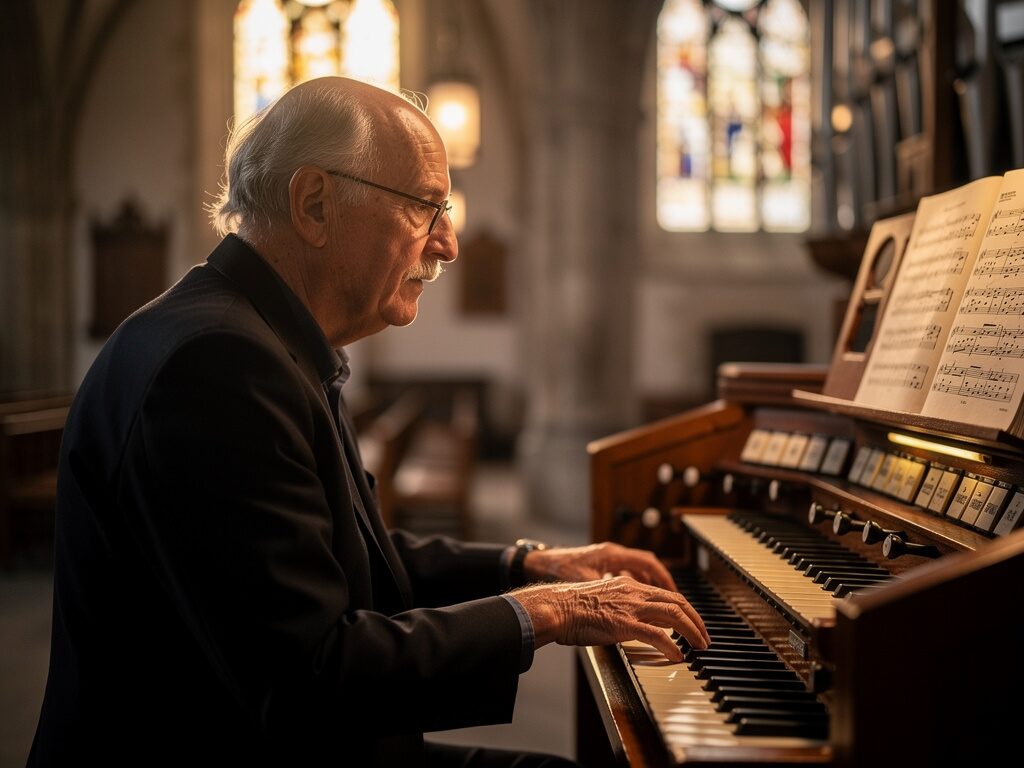
For decades the quiet hope in many congregations was: sooner or later someone will come to the organ bench again. A young church musician, a retired teacher, anyone. That hope was human – and it carried people for a long time. But in more and more congregations it is being disappointed.
The change does not begin with a new app. It begins with an honest admission: in many places the next organist is not coming any more. Whoever accepts this, instead of waiting for it, wins back something decisive – the music in the service.
The key points at a glance
- The shortage of organists in Germany is not a temporary low, but a lasting, demographically driven development.
- Over 40% of the positions for church music in Germany are unfilled – and the gap keeps growing.
- Whoever waits for the “next organist” loses time. Whoever accepts the change secures the music for good.
- eKlecia® is a digital organ app with over 1,000 hand-played organ hymns – a bridge, not a replacement for the human being.
- The solution does not replace an organist. It replaces the silence.
Why is the next organist no longer coming?
In many congregations the next organist is no longer coming because the generation of volunteer church musicians is retiring and hardly anyone is following on. It is not a short-term low that recovers by itself, but a demographic development that has been emerging for years.
The causes are well known and overlap: part-time and voluntary church music is ageing, church-music training reaches fewer young people, and smaller rural congregations can no longer fund a permanent position. An organist today often looks after five, six or more churches at once – and yet cannot be everywhere at the same time.
Many congregations make do as best they can: with long journeys for the one remaining organist, with music from a recording, or by simply singing without accompaniment. These stopgaps keep things going with difficulty, but none is designed to last. They live off the substance instead of securing it.
It hits the small ones first. The village church, the chapel in the care home, the mortuary chapel: there, where no full-time musician ever sat anyway, the gap becomes apparent fastest. Anyone wishing to go deeper into the background will find it in our article The shortage of organists in 2026: causes and solutions.
Can a recording replace an organist?
No – and it is not meant to. A recording does not replace a person who knows the congregation, who plays at the granddaughter's wedding and at the grandfather's funeral. A good digital solution does not replace the organist, but the silence that would otherwise take his place.
This is exactly where the error of reasoning lies that paralyses many congregations. The question is often framed as “human or machine”. But that framing is wrong. The real question on a Sunday morning, when no one is sitting at the organ bench, is simply: music or silence?
“When the pain is great, words may be absent – music may not.”
Anyone who has once experienced a funeral without any music knows that emptiness. Dignified organ music carries a service, a devotion, a farewell. To secure it, even without an organist present, is not a renunciation of tradition – it is its protection.
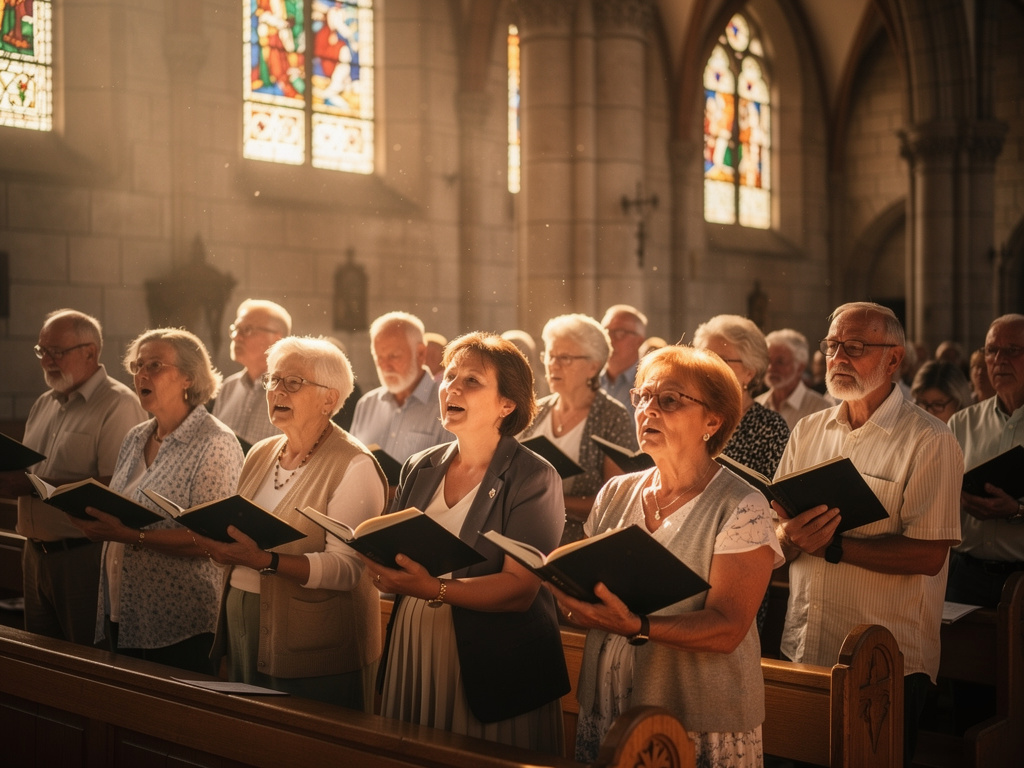
Imagine a perfectly ordinary Sunday morning: the pews are filling, the priest is ready, the congregation opens the Gotteslob – and the organ loft stays empty. In the past one would simply have intoned the hymn at this point, hesitantly and without support. Today all it takes is a reach for the tablet, and the first chord of “Großer Gott, wir loben dich” fills the room as if someone were sitting up there on the bench. The difference is not the technology in the background. The difference is that there is singing at all – supported, secure and with dignity.
What does the sentence mean for the remaining organists?
For the few remaining organists it means above all one thing: relief. Anyone who today looks after five or six congregations cannot play in two places at once – and with eKlecia® no longer has to.
The shortage weighs most heavily on those who are still there. They step in, drive long distances, play three services in a single morning and sacrifice their weekends for it. An app that reliably fills in at a third location takes the pressure off the person who would otherwise be torn between simultaneous appointments. In this way the solution protects not only the music, but also the people who still carry it.
Honour the organist – and still make provision
Where there is still an organist, the organ bench belongs to him. No app in the world replaces the skill, the presence of mind and the connectedness of a person who has played for his congregation for decades. These organists deserve thanks, not replacement.
Accepting the shortage does not mean sitting on one's hands. It means honestly distinguishing between what remains and what should be secured as a precaution. Where a person plays, the person plays. Where no one is left, the silence begins – and that is exactly where the solution steps in.
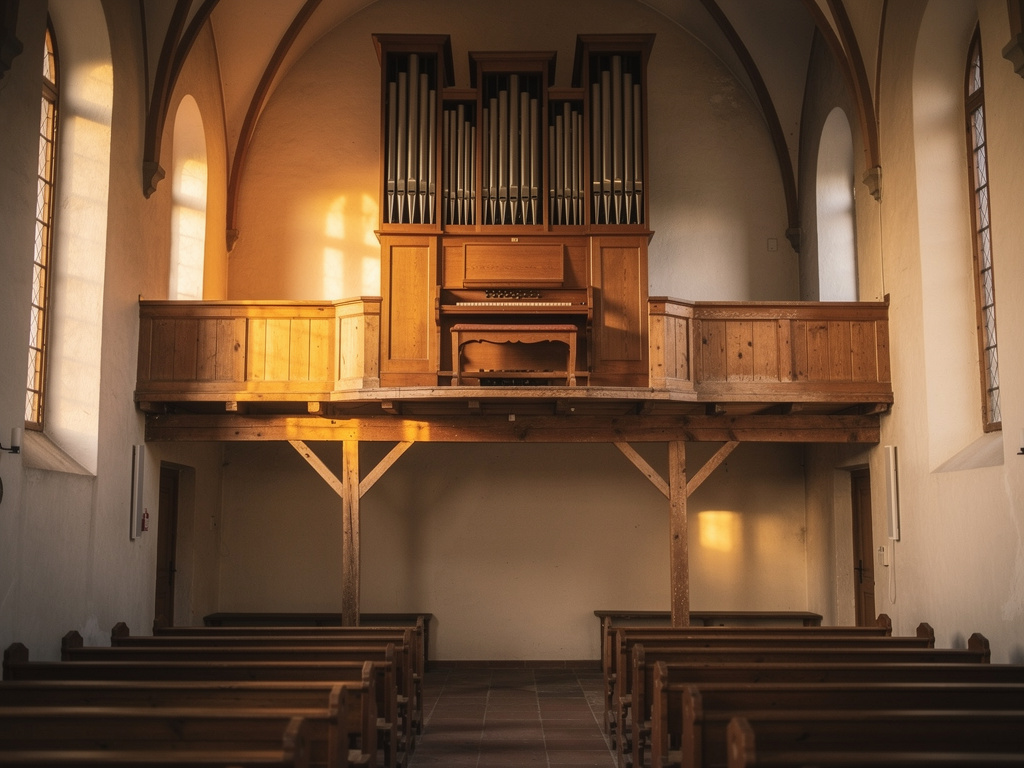
Making provision therefore does not mean replacing the person, but being ready for the day when he cannot come or is no longer there. For the parish on a Sunday without a stand-in. For the care home, where the residents would like to hear their familiar hymns. For the hospital, where the chaplaincy would like to hold a dignified devotion even without a musician.
What is eKlecia® – and how does the app step in?
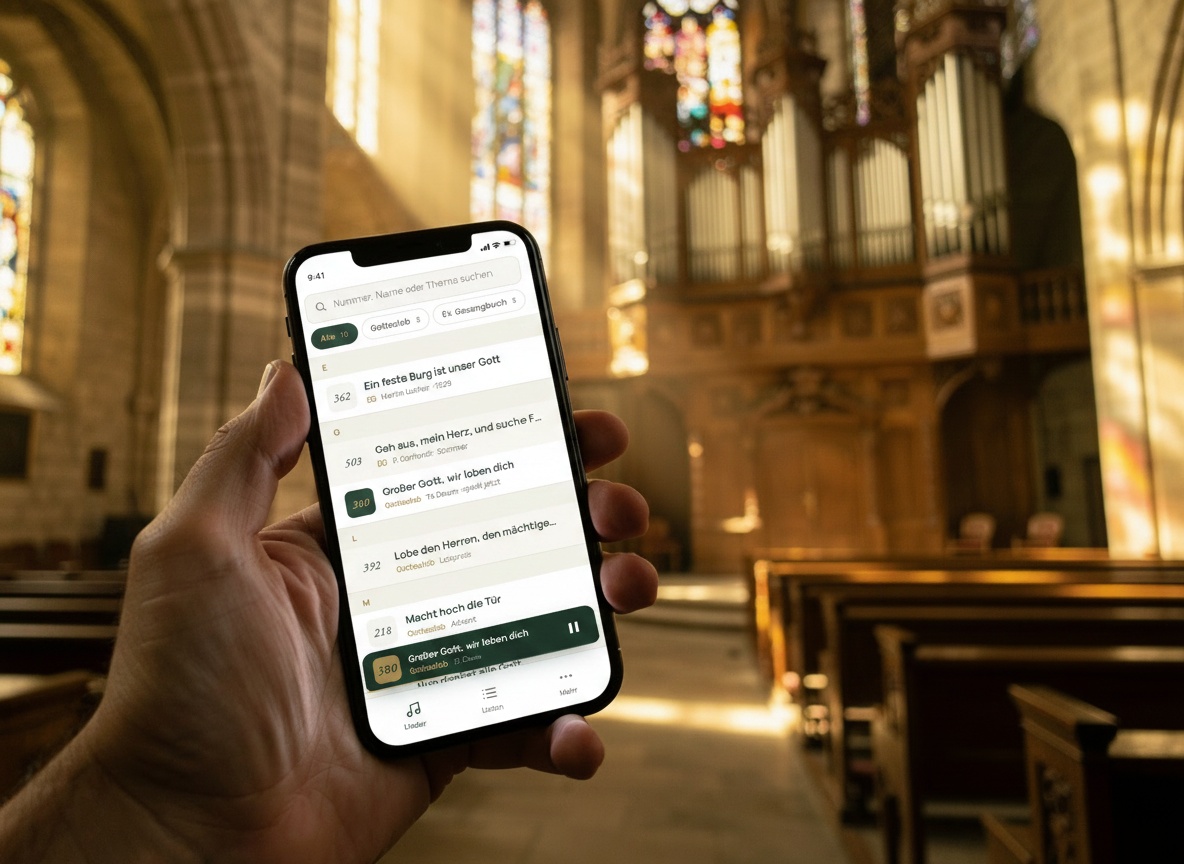
eKlecia® is a digital organ app for parishes, care homes and hospitals that makes over 1,000 hymns – hand-played on real pipe organs – playable via smartphone or tablet. Operating it is as simple as opening a hymn book: choose the hymn, set the number of verses, play.
The app is expressly designed not for technology enthusiasts, but for sacristans, priests and volunteer helpers who on a Sunday simply need reliable music. There is no flood of menus and no technical jargon – anyone who can open a hymn book can also operate eKlecia®.
Real organ sound when no organist is there
Behind eKlecia® there are no artificial sounds, but genuine, hand-played organ recordings from Gotteslob and Evangelisches Gesangbuch. Tempo, key and registration can be adjusted – just as with a real organist.
All the features of the app are made for people who are not technology professionals. It can be tested free of charge and without obligation for four weeks here.
Will the congregation accept digital organ music?
Experience shows: acceptance is high as soon as the music convinces. What counts in the church space is not the technology in the background, but the familiar sound that carries the people.
Scepticism is understandable, especially in a congregation that values tradition. Yet when the first “Großer Gott, wir loben dich” rings out through the room, the question of the “how” quickly recedes into the background. Why digital solutions are becoming more natural in parishes is described in our article Why digital solutions in churches are becoming a matter of course in 2026.
Added to this is a change of generations within the congregations themselves. Today's volunteers are familiar with the smartphone, organise their groups by message and have long been reading the scripture from a tablet. A tool that makes organ music available just as naturally no longer meets with fundamental rejection there, but with relief.
What does the change look like in practice?
The change is smaller than many fear. It requires no conversion, no expensive technology and no IT knowledge. In most cases everything needed is already in the house. Three steps suffice.
| Before | With eKlecia® |
|---|---|
| Waiting for an organist who rarely comes | Independent of the availability of a single person |
| Service without music or cancelled entirely | Full organ sound for every occasion, at any time |
| One person looks after many churches at once | Every institution is provided for independently |
| Worry about complicated technology | Operation as simple as a hymn book |
Step one is the hardest, because it happens in the mind: accepting the shortage instead of waiting for improvement. Step two is surprisingly small – usually the existing loudspeaker equipment or a simple Bluetooth box is enough. Step three is routine: select the hymn and play it, just as the hymn book was opened in the past.
Economically, too, the step is manageable. One licence covers an entire institution, with any number of devices at the same time – without the purchase of expensive special equipment and without a long-term commitment. Measured against a service that would otherwise remain silent, that is a small investment in something great.
What to do if the organist drops out at short notice? For that too there is a clear path – we have described it in the article When the organist drops out.
In this way the uncomfortable sentence from the beginning becomes an attitude that points forward. There are fewer and fewer organists – that is the sad truth. That congregations no longer have to answer this with silence, but with real organ sound: that is the solution.
Would you like to experience how eKlecia® steps in at your institution?
→ All the features of the eKlecia® app
→ Prices and free trial access
→ Get in touch personally now
Frequently asked questions
Does eKlecia® replace the organist?
No. eKlecia® does not replace an organist, but steps in when none is available. Where there is an organist, the organ bench remains reserved for him – the app is intended for the gap, not for replacing the human being.
How many hymns does eKlecia® contain?
eKlecia® contains over 1,000 church hymns from the Gotteslob and the Evangelisches Gesangbuch, professionally played on real pipe organs. The collection is constantly growing.
Do you need expensive technology for it?
No. In most cases the existing loudspeaker system or a simple Bluetooth box is enough. eKlecia® runs on an ordinary smartphone or tablet.
What does eKlecia® cost?
eKlecia® costs 149 euros a month for one institution – with any number of devices at the same time. It can be tested free of charge and without obligation for four weeks.
Is played organ music dignified in a service?
Dignified is whatever serves the occasion. Genuine, high-quality organ recordings carry a service and a devotion where otherwise silence would reign. Many congregations feel that secured music is more dignified than a cancelled or silent service.
More articles
The new eKlecia® version is here: the digital organist against the organist shortage
The organist shortage in 2026: causes, extent and how churches find solutions today