The key points in brief
- Familiar hymns often still reach people with dementia even when words have long since fallen silent.
- Music from childhood and youth is deeply anchored in long-term memory – it awakens memories and gives a sense of security.
- Many care homes would like regular devotions but have no musician – an organ app closes the gap.
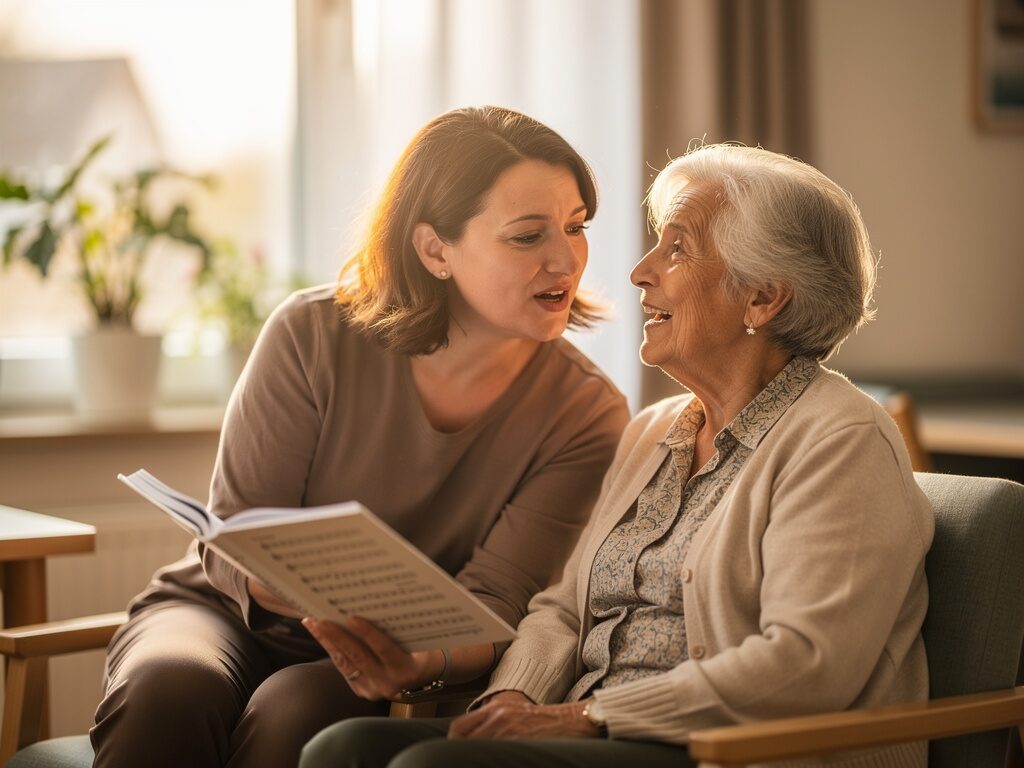
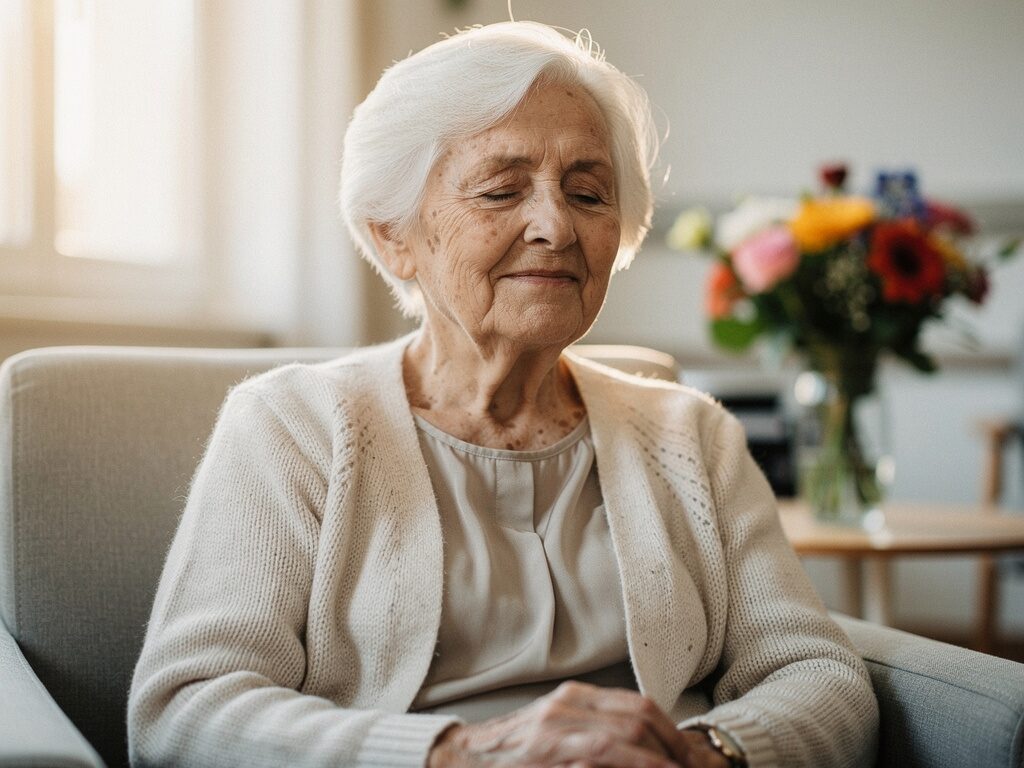
A resident who has barely spoken for months. Then "Großer Gott, wir loben dich" sounds – and suddenly her lips move, she is singing along. Carers experience such moments again and again. Music reaches where words no longer can.
When the words go, the melody remains
With dementia, many abilities fade over time – but the musical long-term memory is often preserved for a surprisingly long time. Hymns that a person sang again and again in childhood and youth are lodged so deeply that they can still be recalled even when the name of one's own grandchild has long since been forgotten.
Music therapists and carers make use of precisely this. A familiar hymn can bring a person back for a moment: into memory, into community, into a feeling of home. It is no miracle – it is the power of music.
Why hymns in particular?
For many older people, hymns shaped Sunday for decades. They are not just any music, but biographically and emotionally charged – connected with one's own childhood, with parents and grandparents, with weddings and funerals, with the familiar sound of the home church.
"Großer Gott, wir loben dich", "Geh aus, mein Herz, und suche Freud", "So nimm denn meine Hände" – these hymns are lodged more deeply than almost anything else. Anyone who strikes them up opens, for many residents, a door that seemed closed.
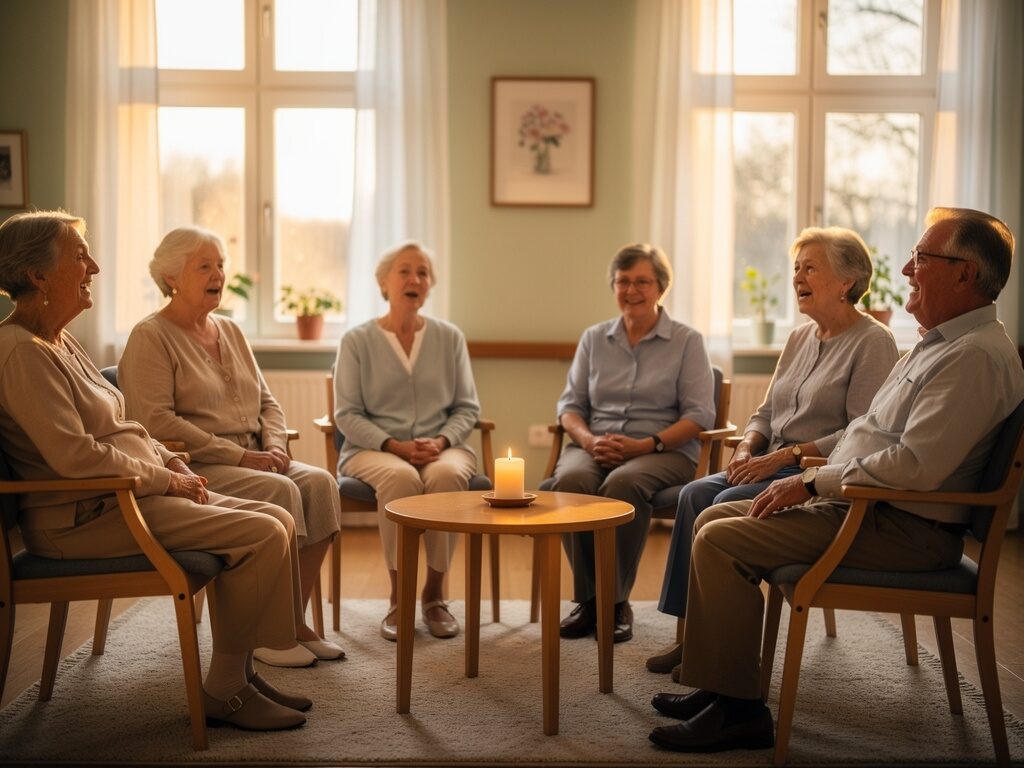
Devotion in the care home – even without a musician
Many facilities would like to offer their residents regular devotions but cannot find an organist or musician to come for them. In the past the CD helped – but it rarely sounds like church and cannot be adapted to slow singing along.
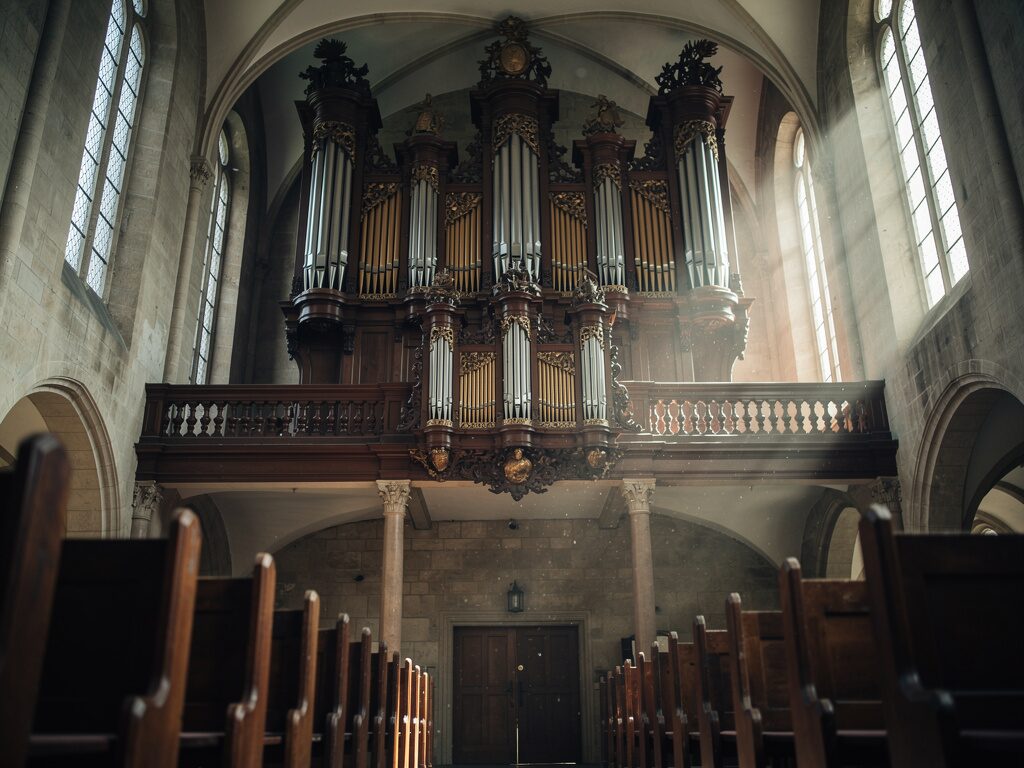
An organ app brings dignified pipe-organ sound into any common or devotional room. Nothing more than a tablet and a small Bluetooth box is needed. The hymn plan is set up in advance; during the devotion a single tap is enough – and the carer has their hands free for what really matters: the people.
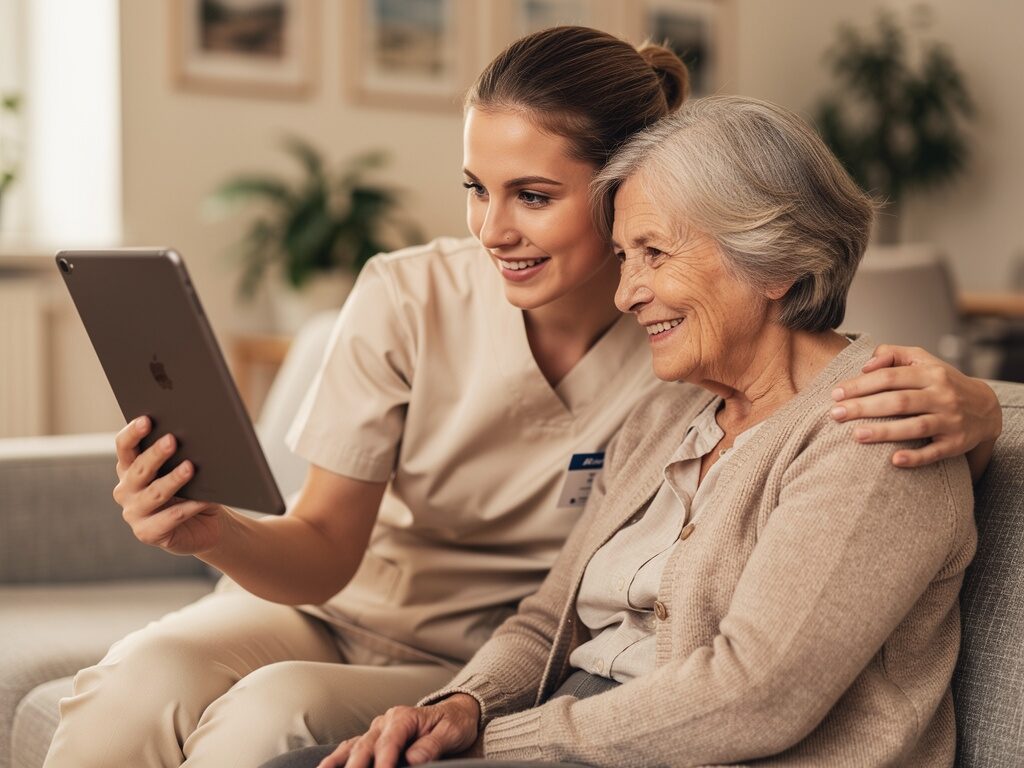
eKlecia® in the care home – dignified devotion without effort
More than 1,000 familiar hymns, recorded on real pipe organs, with an adjustable tempo for older singers. The page eKlecia® in the care and nursing home shows what this looks like in practice – or take a look at the features.
What matters when it comes to the music
- Familiar hymns. The most powerful are the hymns your residents have sung all their lives – not the newest, but the deeply rooted.
- Genuine organ sound. Recordings of real pipe organs sound like church and move people – where thin background music merely plays on.
- A calm tempo. So that everyone can keep up, the tempo can be slowed down – no one is left behind.
- Embedded in a devotion. With prayer, silence and dignity, the hymn becomes a moment of security.
You can read more about practical use on eKlecia® in the care home. And if you would like to know what else matters when accompanying without an organist: When the organist is unavailable.
Dignified devotions in your facility?
With eKlecia® you bring familiar hymns and genuine organ sound into any devotional room – even without a musician.
eKlecia® in the care home →Frequently asked questions
Can hymns reach people with dementia?
Yes. Familiar hymns from childhood and youth are deeply anchored in the musical long-term memory and are often still sung along to even when words and names have long since been forgotten. They awaken memories and give a sense of security.
Which hymns are suitable for devotions in a care home?
The most powerful are familiar classics that the residents have sung all their lives – such as Großer Gott wir loben dich, Geh aus mein Herz und suche Freud or So nimm denn meine Hände. What is decisive is the deeply rooted, not the new.
How do you bring organ music into a care home when no musician is there?
With an organ app, a tablet and a small Bluetooth box. The hymn plan is set up in advance; during the devotion a single tap is enough. Carers and volunteers manage without any technical prior knowledge.
Does an organ app replace a real musician?
No. Where a musician is present, they are irreplaceable. The app closes the gap where none is available – so that devotions can take place at all with dignified, familiar music.