Music Therapy: How to Design a Music Programme for Older Adults with Mental Illness
The key points at a glance
- Music therapy uses music in a targeted way to achieve therapeutic and health-related goals – especially for older people with mental illness.
- As a non-invasive method, music can ease anxiety, restlessness and depressive moods – without the side effects of medication.
- Familiar church music is particularly suitable because it awakens memories and a feeling of security in older people.
- A good music programme is regular, with familiar hymns and attuned to the group.
Introduction: the significance of music therapy in hospitals and care homes
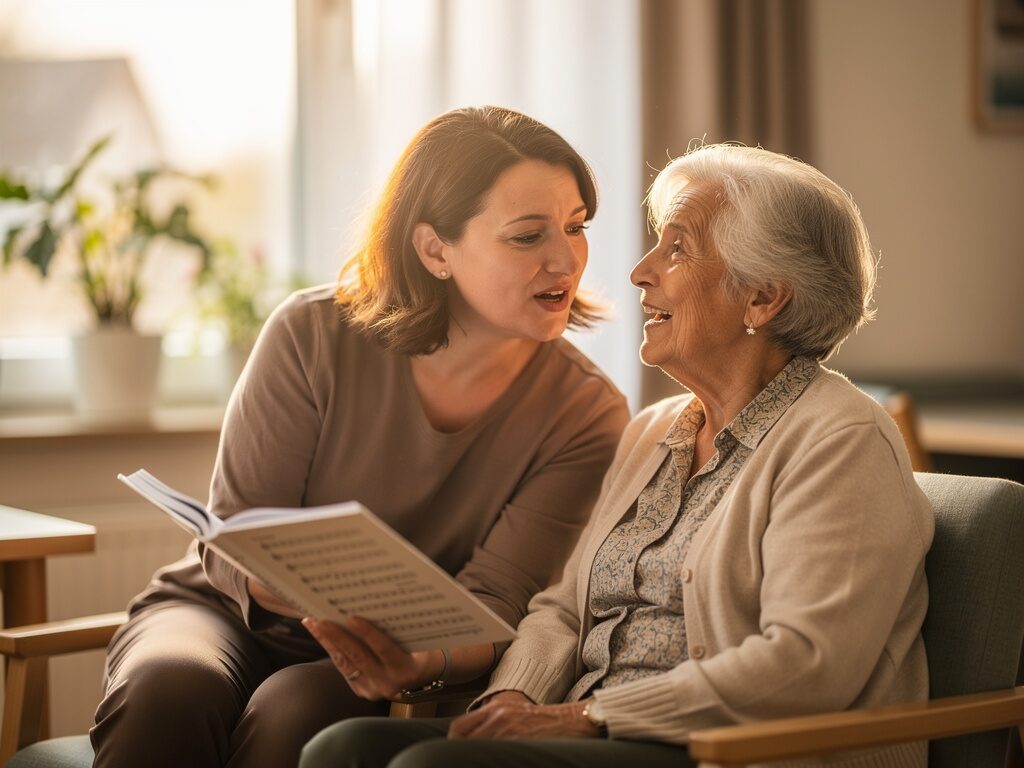
Music therapy is a form of rehabilitative and social intervention that uses music and musical elements to achieve therapeutic and health-related goals.
In hospitals and care homes, music therapy has proven to offer significant benefits for patients with dementia. It has been found that the use of live music in this population reduces agitation, increases enjoyment, diminishes negative behaviour and improves communication skills. Moreover, the presence of live music often enables a more interactive experience between patient and staff.
Music can help people with dementia by reducing their agitation, increasing their enjoyment, diminishing their negative behaviour and improving their communication skills. Some hospitals believe that live music is a more interactive experience from which both the patients and the hospital staff benefit.
Music as a non-invasive treatment for mental illness
Music is an effective means of treating many mental illnesses in a non-invasive way. Music therapy has been used to treat depression, anxiety and dementia.
There are many ways in which music can be used in the fight against mental illness. It can be used for relaxation or to distract from the symptoms of illness. Music therapists usually create individual playlists with an appropriate intensity for each client, depending on their symptoms and needs.
Music therapy is often used in dementia centres, since it has been found that playing calming music can help with memory. This kind of treatment can also reduce restlessness, anger, confusion and depression in patients with dementia, which lowers the risk of aggressive behaviour.
eKlecia® – organ music for therapeutic applications
The eKlecia® app offers music therapists in care homes and hospitals access to over 3,000 hymns – curated, professionally played, instantly available.
Test it now – View all plans →
The case of church music as a musical therapy technique
The church offers a place of worship and a place where people can share their faith. An important aspect of the church is its music. Church-music programmes offer many benefits such as healing and comfort, which is why they are an essential part of the church experience.
“The church offers a place of worship and a place where people can share their faith.”
The church has various benefits that make it a place worth exploring. And one of these benefits is the music it offers. Church-music programmes are there to give people comfort, healing and hope through singing, which makes them an integral part of the religious experience for many people.
Would you like church music in your care home too, but don't know how? You have no organist? No problem!
eKlecia® helps you! Our app is an organ for your phone – with it you can play wonderful melodies and hymns. The eKlecia® app is a digital organ with which you can play music on your smartphone. If you do not have access to an organ in the church, this could be a good alternative. EKlecia offers a service that lets you access and share music that would otherwise not be available. This is especially beneficial for people who, for various reasons, cannot go to the church or cathedral and therefore can neither see nor hear these instruments.
When you use eKlecia® on your smartphone, you have immediate access to a wide range of music titles. The settings for pitch, stops and speed can all be adjusted with the app.
To download the app, go to the Apple Store and search for “organ” or “eKlecia®”. You can find more information about our products at https://eklecia.org/
EKlecia has developed a music app for churches that offers intuitive features and is intended to breathe new life into them.
If you have any questions about our app, feel free to get in touch with us; we are always glad to help. You can find all the information on our website.

Would you like to implement music therapy in your institution with eKlecia®?
→ eKlecia® for care homes
→ eKlecia® for hospitals
→ All the features of the eKlecia® app
→ 3,000+ hymns for music therapy
→ Get in touch now
Frequently asked questions
What is music therapy?
A rehabilitative and social intervention that uses music and musical elements to achieve therapeutic and health-related goals.
How does music help with mental illness in older people?
As a non-invasive method it can ease anxiety, restlessness and depressive moods and increase well-being – without the side effects of medication.
Why is church music suitable for music therapy?
Because familiar church hymns awaken deep memories and a feeling of security in older people.
How do you design a music programme for seniors?
Regularly, with familiar hymns, attuned to the group and in a calm atmosphere; an organ app supplies the right pieces at any time.