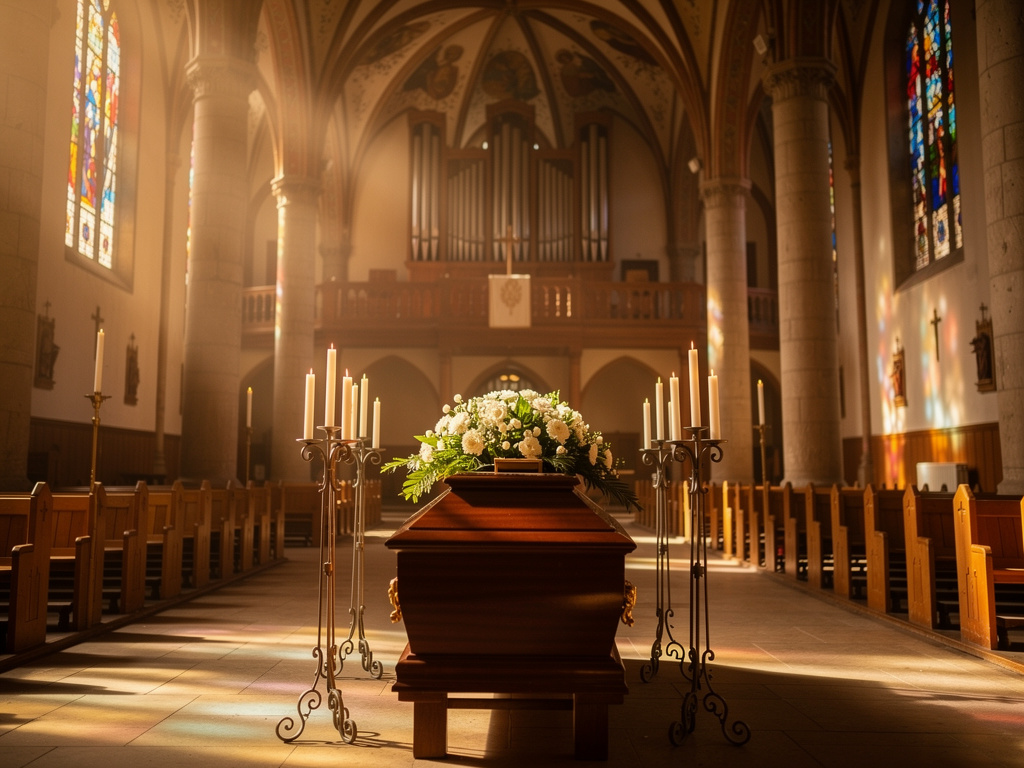
Hymns for a Funeral: The Most Beautiful Funeral Hymns for a Dignified Farewell
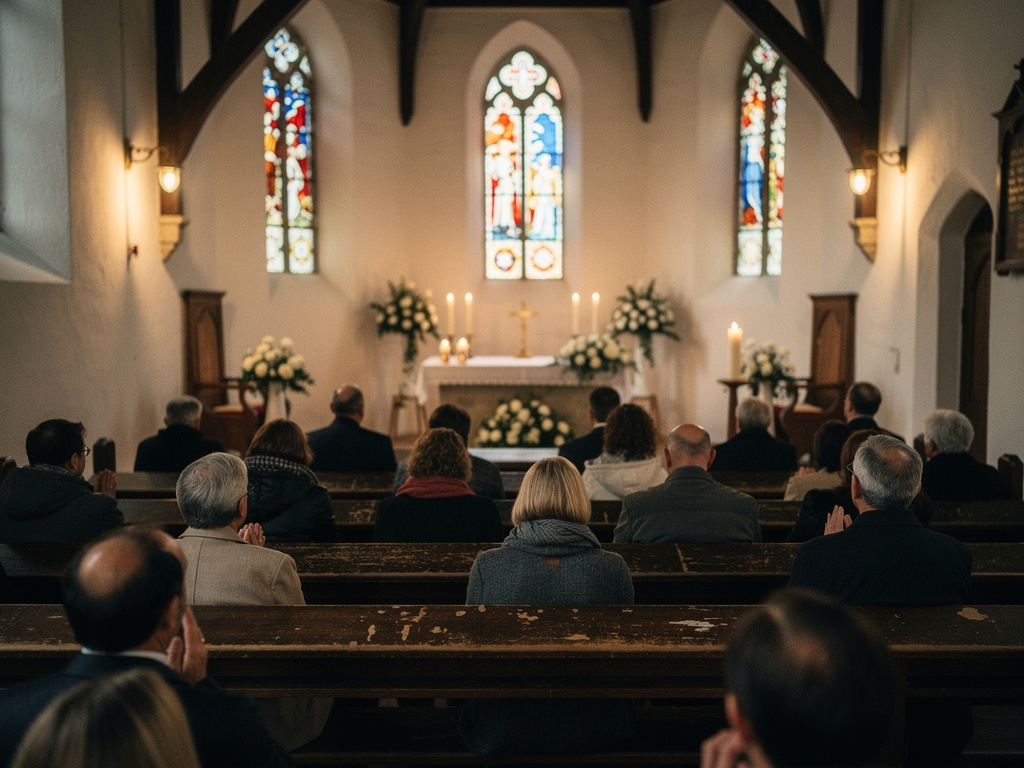
Music carries where words fail
When a person takes their leave, words often fail. That is exactly when music carries us: a familiar hymn on the organ gives comfort, makes room for grief and keeps hope awake, even when the heart is heavy.
Anyone who has ever stood at a coffin knows it: music reaches us where language comes up against its limits. A solemn melody on the organ can release tears, awaken memories and give a feeling of security – precisely in the hardest hours. That is why music at a funeral is not a trimming, but belongs at the heart of the celebration.
Choosing the hymns is one of the first decisions that relatives face after a death. It is both personal and important – for the right funeral hymns shape the farewell and stay in the memory. This overview helps with the choice: with the tried-and-tested hymns from the Gotteslob and the Evangelisches Gesangbuch, a clear assignment to the moments of the funeral service, and an answer to the question of what to do when no organist is available.
The key points in brief
- Funeral hymns above all express comfort, trust and hope – the most frequently chosen are „Von guten Mächten", „Näher, mein Gott, zu dir" and „Wer nur den lieben Gott lässt walten".
- Three to four hymns are usual: at the entrance, in the middle of the service and at the farewell or at the graveside.
- The suitable hymns are found in the Gotteslob (Catholic) and the Evangelisches Gesangbuch (Protestant) – the most important ones, with numbers, are listed below.
- Secular or modern pieces are often possible in consultation with the priest, especially at the recessional or at the graveside.
- If no organist is available, a digital organ app such as eKlecia® secures dignified organ music – even in the funeral hall or at the cemetery.
Which hymns are suitable for a funeral?
For a funeral, the hymns that are most suitable are those that give comfort, express trust and offer hope beyond death. A funeral hymn is a church hymn that takes the pain of parting seriously and at the same time places it in a larger, consoling context.
Four moods recur again and again in good funeral hymns: security („Von guten Mächten"), trust („Wer nur den lieben Gott lässt walten"), hope of resurrection („Christus, der ist mein Leben") and thanksgiving for a life lived („Nun danket alle Gott"). Which direction is the right one depends on the person being bidden farewell – and on what gives the family something to hold on to.
A good guide is the question of how close the deceased was to church life. If faith was important, the great, well-known chorales that carry the whole congregation are fitting. If the person was more distant from the church, many families prefer quiet, instrumental organ pieces and a single familiar hymn. And almost always the rule holds: a personal favourite hymn of the deceased is expressly welcome – it makes the farewell unmistakable.
The most beautiful funeral hymns from the Gotteslob and the Evangelisches Gesangbuch
The following overview gathers the most tried-and-tested funeral hymns with their number in the Gotteslob (GL) and the Evangelisches Gesangbuch (EG). All of them are also contained in the eKlecia® hymn database and recorded on a real pipe organ.
| Hymn | Hymnal | Character |
|---|---|---|
| Von guten Mächten treu und still umgeben | GL 430 · EG 65 | Security, trust |
| Näher, mein Gott, zu dir | GL 502 | Longing, devotion |
| Wer nur den lieben Gott lässt walten | GL 424 | Trust, comfort |
| Was Gott tut, das ist wohlgetan | GL 416 | Acceptance, comfort |
| Christus, der ist mein Leben | GL 507 | Hope of resurrection |
| Wir sind nur Gast auf Erden | GL 505 | Transience, hope |
| Meine Zeit steht in deinen Händen | GL 840 | Life's reckoning, trust |
| Gott, wir vertrauen dir diesen Menschen an | GL 506 | Commending, farewell |
| Jesus lebt, mit ihm auch ich | EG 115 · GL 336 | Easter hope |
| Lobe den Herren, den mächtigen König | EG 316 · GL 392 | Thanks for a life lived |
| Nun danket alle Gott | EG 321 · GL 405 | Thanks, comfort |
| Bewahre uns, Gott, behüte uns, Gott | EG 171 | Blessing, safe passage |
Beyond the hymnal, So nimm denn meine Hände, Befiehl du deine Wege and Psalm 23, „Der Herr ist mein Hirte" ('The Lord is my shepherd'), are also frequently requested. At the recessional or at the graveside, many families additionally choose a quiet instrumental piece such as Ave Maria – borne solemnly on the organ.
Catholic, Protestant or ecumenical – what matters?
Many funeral hymns appear both in the Catholic Gotteslob and in the Evangelisches Gesangbuch – only under different numbers. „Von guten Mächten", for instance, is found as GL 430 and as EG 65. This makes the choice easy at an ecumenical funeral service: you choose hymns that both denominations know and can sing together.
When in doubt, a glance into the respective hymnal or into the hymn database, in which all hymns are sorted by the Gotteslob and the Evangelisches Gesangbuch, helps. The priest or minister of the officiating parish is also glad to advise here.
Which hymns suit which moment of the funeral service?
Three to four hymns are usual, spread across the stations of the funeral service. This way each moment gets its own sound – from the entrance to the final farewell. The exact order is decided by the relatives together with the priest and the funeral director; both know the usual sequence and help to distribute the hymns harmoniously.
- At the entrance: a calm, sustaining hymn that gathers the congregation – such as Wer nur den lieben Gott lässt walten or Was Gott tut, das ist wohlgetan.
- In the middle (after the address or reading): a hymn of trust and hope, often Von guten Mächten or Näher, mein Gott, zu dir.
- At the farewell / commendation: a hymn of commending such as Gott, wir vertrauen dir diesen Menschen an or Christus, der ist mein Leben.
- At the recessional / at the graveside: a hopeful or thankful close – Nun danket alle Gott, Lobe den Herren or a quiet instrumental piece.
Experience shows that the first and the last hymn stay most strongly in the memory. A calm, dignified beginning gently draws the mourners in; a hopeful ending releases them again, comforted. In between it may also become quite still – a moment just for the organ and one's own thoughts.
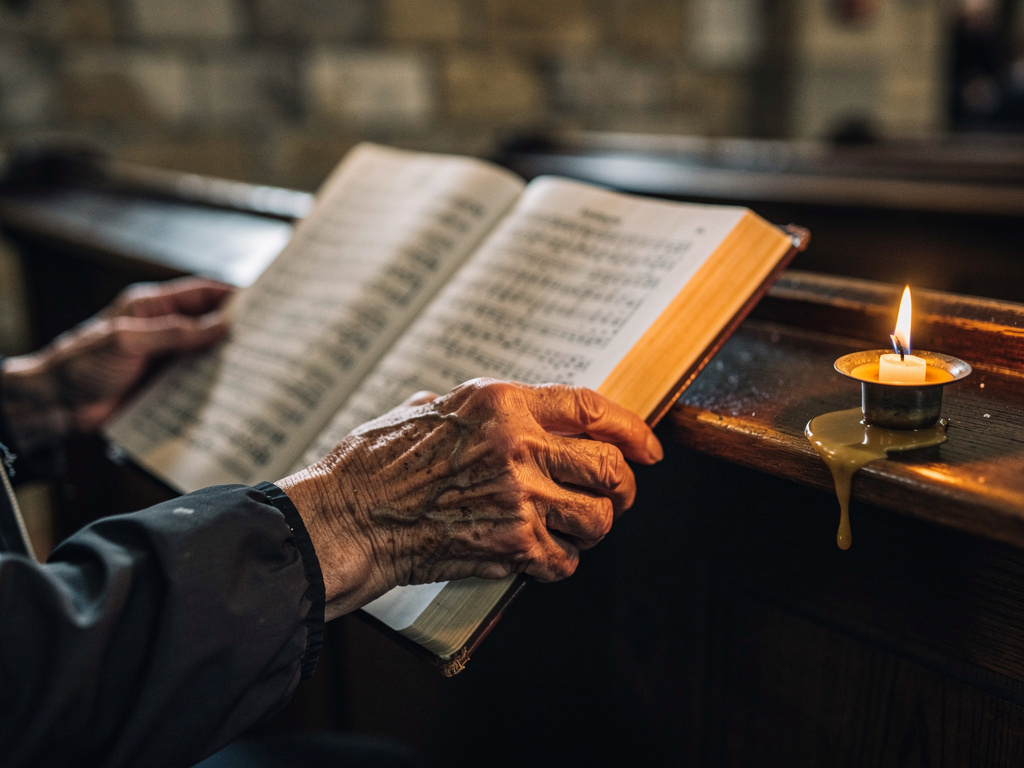
Should the congregation sing along, or should the organ play alone?
Both are possible and dignified. With a large gathering of mourners, singing together carries the moment and grants a sense of community in the farewell. If the mourning party is small or singing comes hard, the organ can also play the hymn purely instrumentally – the familiar melody then works entirely on its own. Often a mixture is most beautiful: one or two hymns to sing along to, plus a solemn organ piece for quiet remembrance.
May modern or secular pieces also be played?
Yes – in consultation with the priest or minister, modern or secular pieces are often possible at a church funeral service, especially at the recessional or at the graveside. In the service itself, sacred music takes priority; a personal favourite piece usually finds its dignified place at the margins.
It is important that the piece suits the dignified setting and can be rendered well on the organ. What is liturgically permitted and what is truly dignified we explore in detail in the article May you play organ music in a church service?.
What to do when no organist is available for the funeral service?
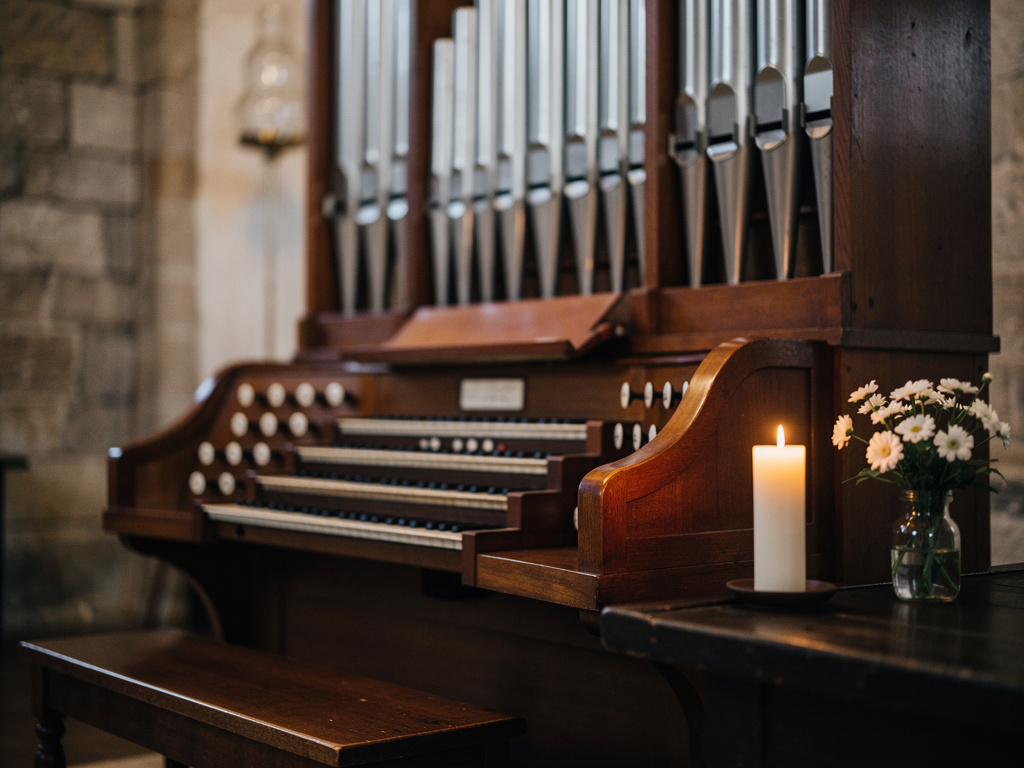
If no organist is available, a funeral need not take place without organ music all the same. Commendations, funeral services in small chapels or at the cemetery in particular often take place today without a musician – because ever fewer organists are available. For the relatives this is a painful thought: at the very moment of parting, the music that gives so much comfort should be missing. It need not be so.
Dignified organ music – even without an organist
eKlecia® is a digital organ app with over 1,000 hymns played by hand on real pipe organs – including all the common funeral hymns. Select the hymn, set the number of verses, play: as simple as opening a hymn book.
Through a small Bluetooth speaker or the existing sound system, the sound carries with dignity through the church, hall or cemetery chapel. More on this on the page Funeral Service & Burial and under Features of the app.
How a parish can react at short notice when the organist is unavailable is described in our article Funeral service without an organist. And anyone who would like to know what an organist usually charges will find the answers in the guide What does an organist cost?.
No one has to make this decision alone. The priest, cantor and funeral director accompany the choice of hymns with experience and sensitivity and take their time over it – usually it is discussed together in the days before the service. Anyone who is unsure does best to begin with a single hymn that describes the deceased well; the others then often follow as if by themselves. In this way the individual pieces form a common thread that carries the whole funeral service, gives comfort and honours the deceased in a dignified way.
In the end it is not the technology in the background that counts, but that the familiar sounds ring out that give grief something to hold on to. A well-chosen hymn – played with dignity – is the most beautiful send-off we can give a person.
Are you planning a funeral service and would like to secure dignified organ music?
→ eKlecia® for the Funeral Service & Burial
→ All funeral hymns in the hymn database
→ Get in touch personally
Frequently asked questions
Which hymns are most frequently chosen for a funeral?
Among the most frequently chosen funeral hymns are Von guten Mächten (GL 430 / EG 65), Näher, mein Gott, zu dir (GL 502), Wer nur den lieben Gott lässt walten (GL 424) and Was Gott tut, das ist wohlgetan (GL 416). They express security, trust and hope.
How many hymns do you need for a funeral service?
Three to four hymns are usual: one at the entrance, one in the middle of the service (for example after the address) and one at the farewell, or at the recessional or the graveside.
May you play a secular piece at a church funeral?
In consultation with the priest, a secular or modern piece is often possible, especially at the recessional or at the graveside. In the actual service, sacred music takes priority.
What to do when no organist is available for the funeral service?
A digital organ app such as eKlecia® plays dignified organ music through a Bluetooth speaker or the existing sound system – even in the funeral hall or at the cemetery. All the common funeral hymns are included.
Who chooses the hymns for the funeral?
As a rule the relatives choose the hymns, often in consultation with the priest and the funeral director. Personal favourite hymns of the deceased are expressly welcome.