The key points in brief
- There is no binding standard price for organists – the fees depend on the occasion, the effort involved and often on the fee schedules of the dioceses and regional churches.
- As a rough guide from practice: a service is often around 30–50 €, a wedding around 50–150 €, a funeral around 25–60 €.
- The price is driven above all by requested pieces that have to be rehearsed, the journey, the season and the qualification (volunteer organist or concert organist).
- Where no organist is available or affordable, stand-ins, regional cooperation or a digital organ app like eKlecia® secure a dignified accompaniment.
Whether a wedding, a funeral or a Sunday service – the question of the cost of an organist arises in almost every parish and for many families. There is no blanket answer. But there are clear ranges, understandable reasons for the differences and ways to secure dignified church music even when the budget is tight or no organist can be reached.
What does an organist cost? The honest answer up front
Depending on the occasion, an organist usually costs between around 25 and 150 euros per engagement. There is no nationwide standard rate: many dioceses and regional churches have their own remuneration or fee schedules for part-time and volunteer church musicians, and in practice congregations and families often negotiate directly with the organist.
And an organist is worth every cent. Behind the few minutes of music in the service lie years of training, practice on a demanding instrument, preparation of the pieces and, not infrequently, a long journey. The following figures are therefore not fixed rates, but reference points from lived experience.
What does an organist cost for a wedding?
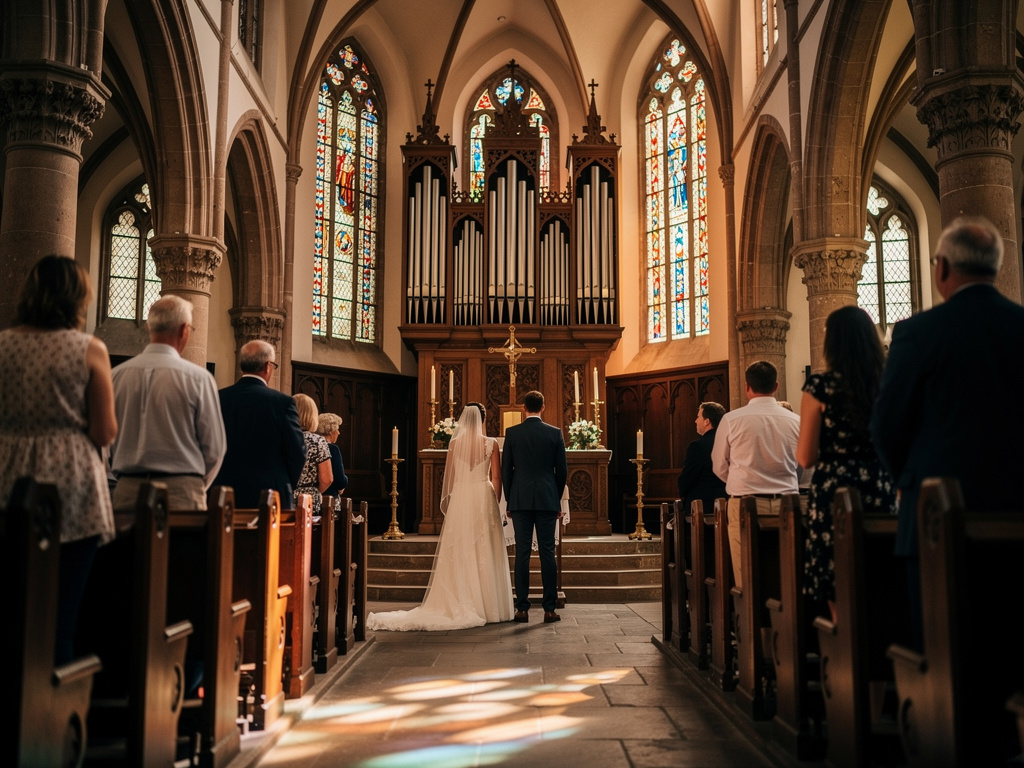
For a church wedding, an organist's fee is usually between 50 and 150 euros. Volunteer or part-time organists are often in the range of 50 to 90 euros, while a trained concert organist with special requested pieces is rarely available for under 150 euros.
Why this range? For the organist, a wedding is more than the ceremony itself. Anyone who wishes for "Halleluja" by Leonard Cohen, a particular piece for the entrance or a festive recessional demands preparation – some pieces have to be specially rehearsed. Added to this are the accompaniment of the entrance, the ceremony and the recessional, the coordination with the couple and the journey. The season plays a role too: in the popular summer months demand is high, and the fees rise accordingly.
What does an organist cost for a funeral?
For a funeral service, organists often charge between 25 and 60 euros. The amount is thus often lower than for a wedding, because the repertoire is more classic and the preparation involved is less – every church musician has mastered the well-known funeral hymns from the Gotteslob.
It becomes difficult when no organist from one's own parish is available at short notice. A stand-in organist from the neighbouring parish quickly brings travel costs of 150 euros and more – a burden that hurts all the more in the midst of grief. For the musical accompaniment of funerals in the church, in the mortuary chapel and at the graveside, many families therefore look for more reliable solutions.
What does an organist cost in an ordinary service?
For a Sunday service the fee is typically 30 to 50 euros – provided the organist is not permanently employed anyway or working under a flat-rate parish remuneration. In many church congregations and parishes, a part-time or volunteer church musician takes on the duty, whose remuneration is regulated in the diocesan or regional-church order.
Who pays the organist – the parish or the couple?
For an ordinary service, the church congregation bears the cost of the organist, usually through a permanent post or a flat-rate remuneration. For occasional services such as weddings and funerals, by contrast, it is generally the family who pays – that is, the couple or the bereaved. The fee is often settled together with the other church charges through the parish office.
Exactly how the billing is done varies from diocese to diocese and from regional church to regional church. Some parishes set out the organist costs transparently in their fee schedule, others handle them individually. Asking early avoids surprises: particularly for funerals that have to be arranged at short notice, it is worth clarifying the musical accompaniment right at the first conversation with the parish – a call to the parish office reliably provides clarity here.
What do the costs of an organist depend on?
The wide range is explained by several factors that combine in each individual case:
- Qualification: A volunteer organist calculates differently from a full-time concert organist.
- Requested pieces: If pieces have to be freshly rehearsed, the effort rises – and so does the fee.
- Occasion and duration: Weddings and special celebrations involve more work than a familiar service.
- Journey: In the countryside in particular, the nearest available organist may live 40 or 60 kilometres away.
- Season: In the summer months, demand for wedding organists is at its highest.
- Region and regulations: Dioceses and regional churches often set the framework for remuneration.
Organist fees at a glance
The following overview summarises the usual ranges. It does not replace a conversation with the organist or your own parish, but it gives a realistic orientation:
| Occasion | Usual fee range |
|---|---|
| Sunday service | approx. 30–50 € |
| Church wedding / marriage | approx. 50–150 € |
| Funeral service / burial | approx. 25–60 € |
| Stand-in with a long journey | plus travel costs (often 100 €+) |
A predictable alternative when individual fees add up
Where stand-in fees mount up week after week, or simply no organist can be found any more, a digital organ app offers a reliable supplement. eKlecia® provides more than 1,000 hymns recorded on real pipe organs at a fixed monthly price – available at any time, with no journey, on transparent terms.
What to do when no organist is available or affordable?
More and more often, the honest question is not "How much does the organist cost?", but "Where can we even find one at all?". The shortage of organists has become an everyday reality in many regions. Three approaches have proven their worth:
- Regional cooperation: Several parishes share organists and coordinate dates.
- Fair, transparent remuneration: Those who value church musicians and pay them reliably keep them longer.
- Digital organ music as a bridge: An app with genuine organ recordings reliably steps in when no one is available.
A digital organ app like eKlecia® is a collection of sacred organ music: more than 1,000 hymns from the Gotteslob and the Evangelisches Gesangbuch, recorded on real pipe organs and playable via smartphone or tablet through any loudspeaker. It does not replace a living organist – but it ensures that no service is left without dignified music.
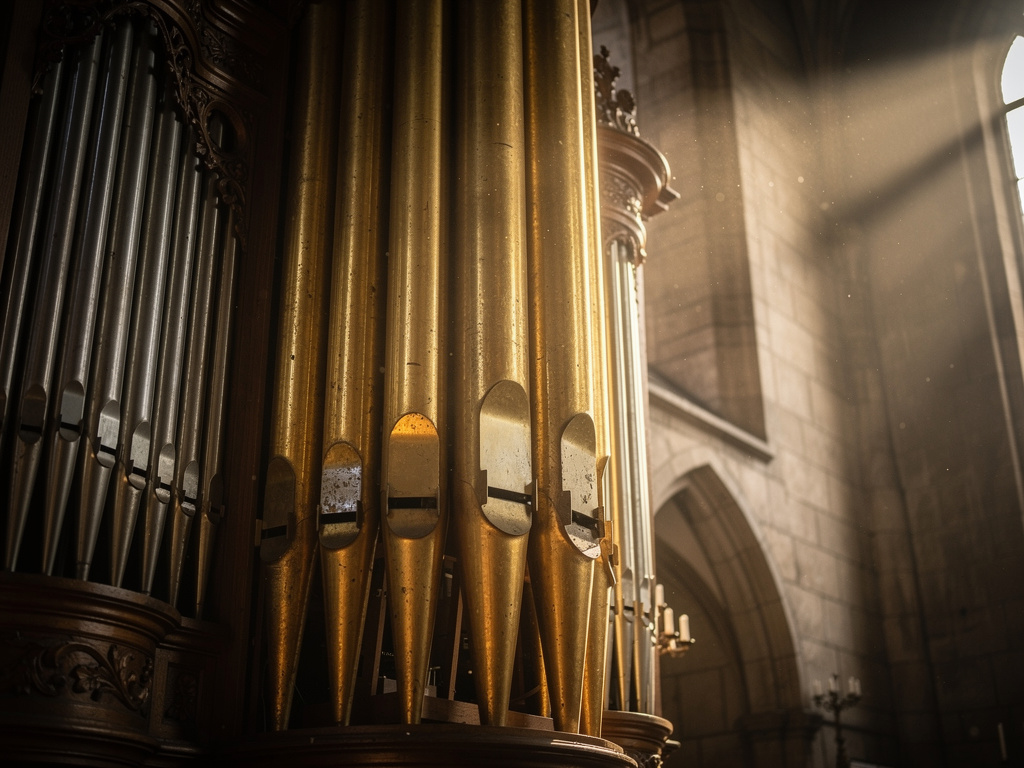
"What people perceive in the service is not the price – but that the organ sounded, dignified and reliable."
Fair remuneration and reliable accompaniment – no contradiction
The cost of an organist is money well spent, for it sustains a centuries-old tradition. Wherever possible, this tradition should be nurtured and fairly remunerated. And where, despite every effort, no organist is available, a dignified digital accompaniment is by all means better than silence or a loveless loudspeaker solution. The two are not mutually exclusive – they complement each other.
Would you like to secure the musical accompaniment of your parish for the long term?
Try eKlecia® at your leisure and see how easily genuine organ music comes to your church via an app – with no contract, no risk.
Try eKlecia® for freeFrequently asked questions
What does an organist cost?
There is no standard price. As a rough guide from practice, a service is often around 30–50 €, a wedding around 50–150 € and a funeral around 25–60 €. Many dioceses and regional churches regulate remuneration through their own fee schedules.
What does an organist cost for a wedding?
For a church wedding, the fee is usually between 50 and 150 euros. It depends on whether special requested pieces have to be rehearsed, how long the journey is and in which season the wedding takes place – demand is highest in summer.
What does an organist cost for a funeral?
For a funeral service, organists often charge between 25 and 60 euros. If only a stand-in organist from the neighbouring parish is available at short notice, travel costs of 100 euros and more may be added.
Why do organist fees vary so widely?
Because several factors combine: the qualification (volunteer or concert organist), the effort involved in requested pieces, the journey, the season and the regional remuneration schedules of the dioceses and regional churches.
Who pays the organist at a wedding or funeral?
At weddings and funerals, it is generally the family who pays – the couple or the bereaved respectively – often billed through the parish office. For ordinary services, the church congregation bears the cost.
Is there a cheaper alternative to an organist?
Where no organist is available or affordable, a digital organ app like eKlecia® offers a supplement: more than 1,000 hymns recorded on real pipe organs at a fixed monthly price, available at any time. It does not replace a living organist, but it secures a dignified accompaniment.