Music makes the wedding unforgettable
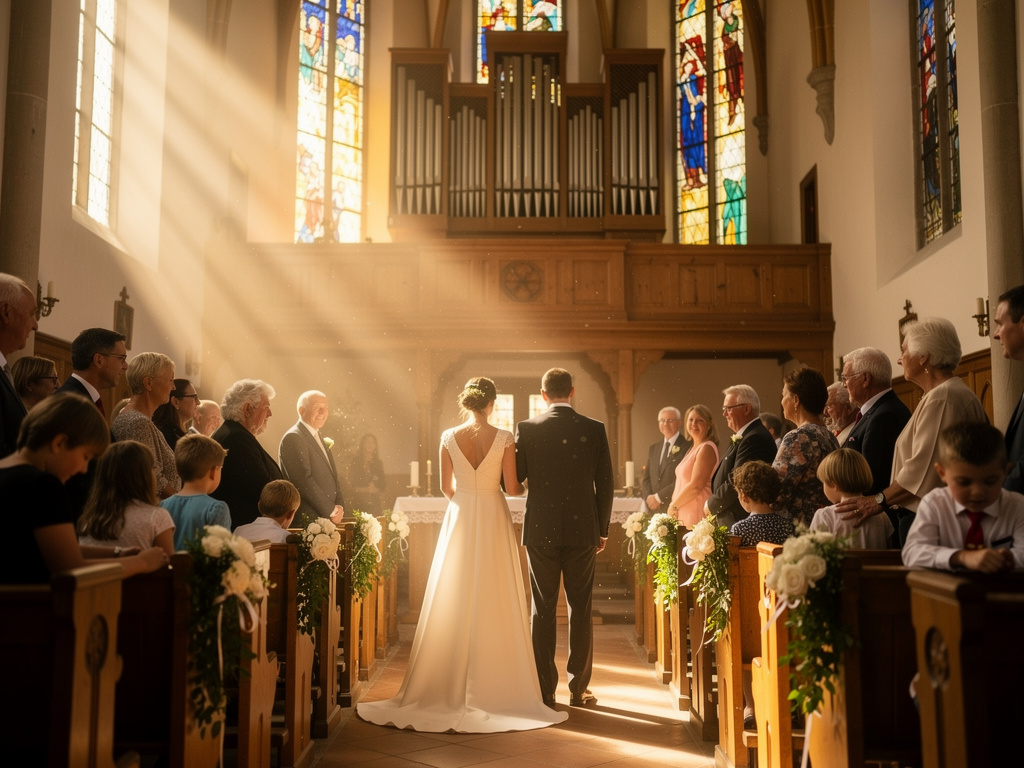
A hymn at the right moment touches everyone in the church at a wedding – the bride and groom, the family, the guests. The right wedding hymns give the exchange of vows a festive setting and stay in the memory for a long time.
Anyone who has ever sat in a church when the organ comes in full for the recessional and the whole congregation strikes up a hymn of praise knows this moment: the music carries the joy further than words could. That is precisely why, at a wedding, it is not a trimming but belongs at the heart of the celebration.
For many couples, choosing the music is one of the most beautiful – and most important – decisions in preparing their church wedding. Which hymns does the congregation sing? What sounds at the processional, what at the blessing, what at the recessional into their life together?
This overview helps with the choice: with the tried-and-tested wedding hymns from the Gotteslob and the Evangelisches Gesangbuch, a clear assignment to the moments of the wedding – and an answer to the question of what to do when no organist is available.
The key points in brief
- Wedding hymns for church above all express thanks, blessing, trust and the love of God – the most frequently chosen are „Nun danket alle Gott", „Lobe den Herren" and „Herr, wir bitten: Komm und segne uns".
- Three to four hymns are usual: at the processional, during the wedding (for example after the vows) and at the recessional.
- The suitable hymns are found in the Gotteslob (Catholic) and the Evangelisches Gesangbuch (Protestant) – the most important ones, with numbers, are listed below.
- Modern or secular pieces are often possible in consultation with the priest, especially at the processional or recessional.
- If no organist is available, a digital organ app such as eKlecia® secures festive organ music – even in the small village church.
Which hymns are suitable for a church wedding?
For a church wedding, the hymns that are most suitable are those that express thanks and joy, ask for God's blessing on the shared path and speak of trust and love. A good wedding hymn carries the festive joy and at the same time places it in a larger, blessed context.
Four moods recur again and again in good wedding hymns: praise and thanks („Großer Gott, wir loben dich"), blessing for the shared path („Herr, wir bitten: Komm und segne uns"), trust that God carries the marriage („Wer nur den lieben Gott lässt walten"), and love as the heart of faith („Wer glaubt, ist nie allein").
A good guide is the question of how close the couple stands to church life. If faith is important, the great, well-known chorales that carry the whole congregation are fitting. If the couple is more distant from the church, many prefer one or two familiar hymns plus festive organ music for the processional and recessional. And almost always the rule holds: a personal favourite hymn is expressly welcome – it makes the wedding unmistakable.
In the end only one thing matters: that the hymns touch the couple. A single, honestly chosen hymn weighs more than a long list – it stays in the memory long after the day is over.
The most beautiful wedding hymns from the Gotteslob and the Evangelisches Gesangbuch
The following overview gathers the most tried-and-tested wedding hymns with their number in the Gotteslob (GL) and the Evangelisches Gesangbuch (EG). All of them are also contained in the eKlecia® hymn database and recorded on a real pipe organ.
| Hymn | Hymnal | Character |
|---|---|---|
| Nun danket alle Gott | EG 321 · GL 405 | Thanks, solemn |
| Lobe den Herren, den mächtigen König | EG 316 · GL 392 | Praise, festive processional |
| Großer Gott, wir loben dich | EG 331 | Praise, solemn conclusion |
| Herr, wir bitten: Komm und segne uns | GL 860 | Blessing for the journey |
| Möge die Straße uns zusammenführen | GL 859 | Irish blessing, heartfelt |
| Bewahre uns, Gott, behüte uns, Gott | EG 171 | Blessing, safe passage |
| Herr, vor dein Antlitz treten zwei | EG 238 | classic wedding hymn |
| Du hast uns, Herr, in dir verbunden | EG 240 | Togetherness, wedding |
| Freuet euch im Herren allewege | EG 239 | Joy, wedding |
| Lass uns in deinem Namen, Herr | GL 446 | New beginning, community |
| Wer glaubt, ist nie allein | GL 853 | Faith, hope, love |
| Ich lobe meinen Gott von ganzem Herzen | EG 272 · GL 400 | joyful, thankful |
Beyond the hymnal, Vertraut den neuen Wegen and Der Herr segne dich are also frequently requested. For the processional or during the wedding, many couples additionally choose a festive instrumental piece – the well-known Wedding March (Hochzeitsmarsch) or an Ave Maria, borne solemnly on the organ.
Catholic, Protestant or ecumenical – what matters?
Many wedding hymns appear both in the Catholic Gotteslob and in the Evangelisches Gesangbuch – only under different numbers. „Nun danket alle Gott", for instance, is found as EG 321 and as GL 405. This is especially practical at an ecumenical wedding, when the bride and groom belong to different denominations: you choose hymns that both sides know and can sing together.
When in doubt, a glance into the respective hymnal or into the hymn database, in which all hymns are sorted by the Gotteslob and the Evangelisches Gesangbuch, helps. The priest or minister of the officiating parish is also glad to advise here.
Which hymn suits which moment of the wedding?
Three to four hymns are usual, spread across the stations of the wedding. This way each moment gets its own sound – from the solemn processional to the joyful recessional. You decide the exact order together with the priest and the organist; both know the usual sequence and are glad to advise.
- At the processional: festive organ music or a strong hymn of praise such as Lobe den Herren, den mächtigen König – often the classic wedding march as an instrumental piece.
- During the wedding (for example after the vows or at the exchange of rings): a hymn of togetherness and trust, often Du hast uns, Herr, in dir verbunden or Lass uns in deinem Namen, Herr.
- At the blessing: a blessing hymn for the shared path – Herr, wir bitten: Komm und segne uns, Bewahre uns, Gott or Möge die Straße uns zusammenführen.
- At the recessional: a thankful, joyful close – Nun danket alle Gott or Großer Gott, wir loben dich, ideally festive on the organ.
Experience shows that the first and the last hymn stay most strongly in the memory. A festive processional draws the guests into the special moment; a radiant recessional releases the couple into their life together.
Discuss the hymns with the organist in good time – also so that he can practise unfamiliar pieces at his leisure. And let the congregation know the hymn numbers, for example via an order-of-service sheet or the hymn board: this way everyone sings along instead of searching.
May modern or secular pieces also be played?
Yes – in consultation with the priest or minister, modern or secular pieces are often possible at a church wedding, especially at the processional, the recessional or as an instrumental piece during the celebration. In the service itself, sacred music takes priority; the personal favourite piece usually finds its dignified place at the margins.
It is important that the piece suits the festive, dignified setting and can be rendered well on the organ. What is liturgically permitted and what is truly dignified we explore in detail in the article May you play organ music in a church service?.
Have them sing, or let the organ play alone?
Both are possible and festive. With a large wedding party, singing together carries the moment and grants a real celebratory mood. If the wedding is small or the guests do not know the hymns, the organ can also play the melodies purely instrumentally – solemn and dignified. Often a mixture is most beautiful: one or two hymns to sing along to, plus festive organ pieces for the processional and recessional.
What to do when no organist is available for the wedding?
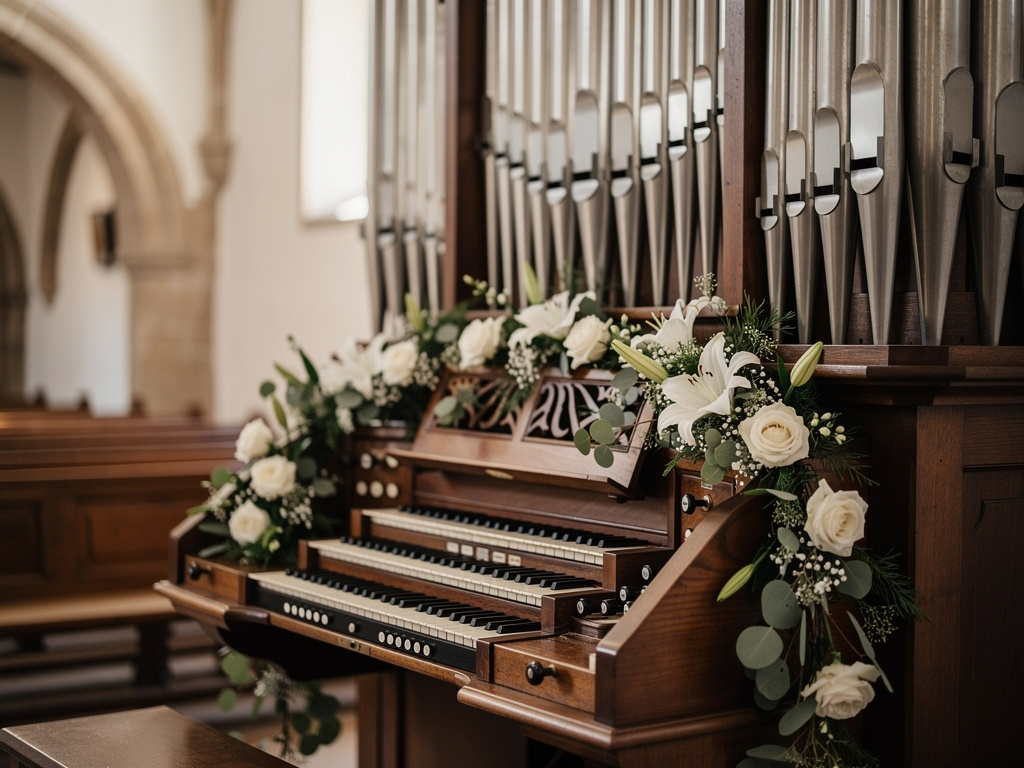
If no organist is available, a wedding need not take place without festive organ music all the same. In small village churches in particular, or at short-notice dates, often no musician is on hand today – because ever fewer organists are available. Should the music then be missing on the most beautiful day of all? It need not be so.
Festive organ music – even without an organist
eKlecia® is a digital organ app with over 1,000 hymns played by hand on real pipe organs – including all the common wedding hymns and festive processional and recessional pieces. Select the hymn, set the number of verses, play: as simple as opening a hymn book.
Through a small Bluetooth speaker or the existing sound system, the sound carries with dignity through the church. More on this on the page Wedding & Marriage Ceremony and under Features of the app.
What an organist usually charges you can read in the guide What does an organist cost?. And anyone looking for hymns for a different occasion will find them in our overview Hymns for a funeral.
In the end it is not the technology in the background that counts, but that the festive sounds ring out that crown the day. A well-chosen hymn – played with dignity – is the most beautiful accompaniment into a life together.
We wish you, from the heart, a wedding full of music – and a day on which the sound of the organ carries what words can scarcely say.
Are you planning a wedding and would like to secure festive organ music?
→ eKlecia® for the Wedding & Marriage Ceremony
→ All wedding hymns in the hymn database
→ Get in touch personally
Frequently asked questions
Which hymns are most frequently chosen for a church wedding?
Among the most popular wedding hymns are Nun danket alle Gott (EG 321 / GL 405), Lobe den Herren, den mächtigen König (EG 316 / GL 392), Herr, wir bitten: Komm und segne uns (GL 860) and Du hast uns, Herr, in dir verbunden (EG 240). They express thanks, blessing and togetherness.
How many hymns do you need for a church wedding?
Three to four hymns are usual: one at the processional, one during the wedding (for example after the vows or at the exchange of rings) and one at the recessional. Festive organ pieces for the processional and recessional are often added.
May you play a secular piece or a pop song at a church wedding?
In consultation with the priest, a secular or modern piece is often possible, especially at the processional, the recessional or as an instrumental piece. In the actual service, sacred music takes priority.
What does an organist cost for a wedding?
For a wedding, fees usually lie in the range of around 80 to 150 euros, depending on region and effort. More detail is given in the eKlecia guide to organists' fees.
What to do when no organist is available for the wedding?
A digital organ app such as eKlecia® plays festive organ music through a Bluetooth speaker or the existing sound system – even in the small village church. All the common wedding hymns and processional and recessional pieces are included.